
Table of Contents
Lower Respiratory Infections: What You Need to Know
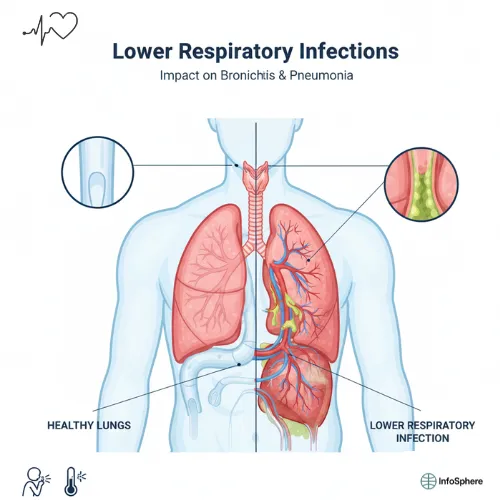
Lower respiratory infection is a disease that affects the lungs and airways, causing difficulty breathing.
This disease is more dangerous for young children (under 5 years of age), older people, smokers, and people with weakened immunity.
For example, if someone gets the flu and doesn’t pay attention, the infection can spread to the lower lungs, causing severe breathing and coughing. If diagnosed early and treated promptly, the patient can recover easily.
Causes of Lower Respiratory Infections
Lower respiratory infections occur when germs (viruses or bacteria) reach our lungs. These germs are often found in dirty, polluted, or crowded areas.
For example:
If a person is in a crowded bus stop or market where people are coughing, the virus can spread into the air. Or if an area is not kept clean, bacteria can grow there and enter the body through the respiratory tract.
Common viruses that cause this infection:
• RSV (Respiratory Syncytial Virus)
• Influenza (flu virus)
• Coronavirus
Common bacteria:
• Streptococcus pneumoniae (this is the main cause of pneumonia)
Types of Lower Respiratory Infections
1. Pneumonia
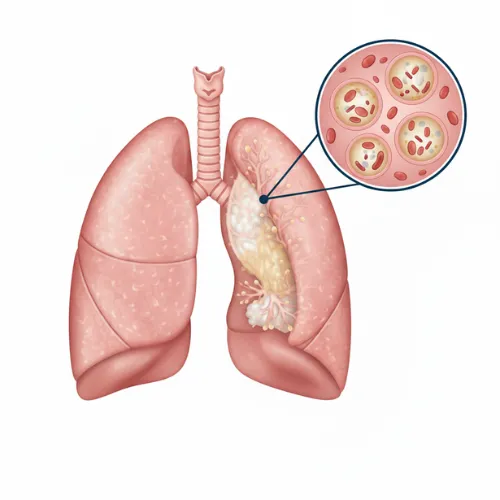
It is an infection in which the small air sacs (where oxygen exchange occurs) inside the lungs become inflamed and sometimes fill with fluid or pus. This makes breathing very difficult.
Example: Imagine your lungs are like a sponge. A normal sponge is filled with air, but if it fills with fluid, it will not function. Similarly, in pneumonia, the lungs fill with fluid instead of air.
Types:
• Viral pneumonia: This is usually mild and resolves within 2–3 weeks without antibiotics.
• Bacterial pneumonia: This is more dangerous. If not treated promptly, it can lead to respiratory failure (shortness of breath), sepsis (infection spreading throughout the body), or lung abscess (accumulation of pus).
Who is at greater risk:
• Older people
• Young children
• People with low immunity (such as those with diabetes or chronic illnesses)
But if detected early and treated promptly, most people recover fully.
2. Bronchitis
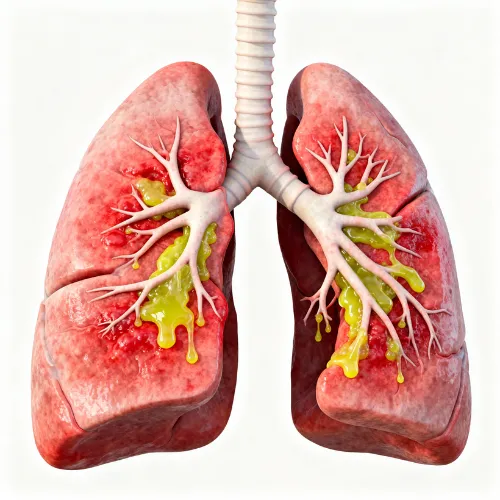
It is a condition in which the bronchial tubes (the passages of the lungs through which air flows in and out) become inflamed. It often occurs after an infection in the nose, throat, or sinuses gradually spreads to the lungs.
Example: Think of your respiratory system as a pipe. If the pipe becomes inflamed, air cannot pass through easily. Similarly, bronchitis causes difficulty breathing and a persistent cough.
Bronchitis’s common symptoms:
• Persistent cough, sometimes with mucus (phlegm).
• Wheezing, meaning a “siii-siii” sound when breathing.
• Shortness of breath- shortness of breath.
• Chest discomfort- burning or pain in the chest.
Symptoms and Warning Signs
Symptoms of a lower respiratory infection can vary slightly from person to person, but some common signs are always present:
• persistent cough (sometimes with mucus, sometimes without mucus)
• Difficulty breathing
• Chest pain or tightness
• Fever and chills
• Feeling tired or weak
Suppose someone previously had a mild flu, but now their cough persists, fever comes and goes, and shortness of breath begins- these signs indicate that the infection has reached the lungs. If these symptoms are seen in small children, elderly people, or any person with low immunity, then it is important to consult a doctor immediately.
Diagnosis
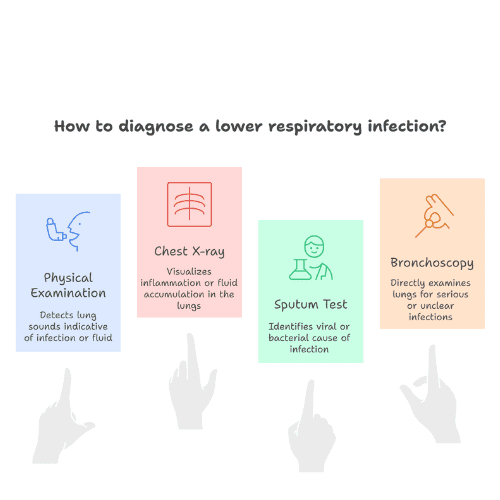
To diagnose a lower respiratory infection, doctors perform several tests and check-ups to determine the exact cause of the infection.
- Physical Examination:
Doctors listen to the lungs with a stethoscope. If there is a cracking or wheezing sound in the lungs, it could be a sign of infection or fluid. - Chest X-ray:
This test allows doctors to see if there is inflammation or fluid accumulation in the lungs. Infections like pneumonia are clearly visible on X-rays. - Sputum Test:
This test is of mucus. The doctor sends the sample to the lab to determine whether the infection is caused by a virus or bacteria. - Bronchoscopy:
This is an advanced test. It uses a small tube with a camera (bronchoscope) to look directly inside the lungs. This is done when the infection is serious or not clear on X-ray.
Treatment Options
Most mild lower respiratory infections (such as mild bronchitis or a viral infection) heal on their own if you focus on rest, water, and basic care. But if the infection is more severe, doctors may prescribe medications that help with recovery:
- Pain and Fever Relief:
If you experience fever, body aches, or chest pain, doctors may prescribe NSAIDs such as ibuprofen, naproxen, or acetaminophen (paracetamol). - Breathing Support:
If there is difficulty breathing or wheezing, a bronchodilator inhaler is prescribed—it opens the passages in the lungs so that air can flow freely.
Example: Just as air cannot flow through a blocked pipe, an inhaler works to open the pipe.
Most importantly:
If symptoms persist or worsen, follow your doctor’s advice. Early treatment can slow the disease from worsening and speed recovery.
Latest Research on Lower Respiratory Infections: Bronchitis and Pneumonia
New Vaccine Breakthroughs
- PCV21 (CAPVAXIVE) is a pneumonia vaccine approved by the FDA for adults in June 2024. It can be given to adults 18 years and older. This vaccine provides protection against 21 different pneumonia strains. In adults 50+, it provides up to 84% protection against serious infection (invasive disease). Merck+1
- PCV20 vaccine is capable of preventing pneumonia in a single dose, and patients are being explained in simple language how it works.
- RSV vaccines are working and proving to be quite effective in real life.
Abrysvo: 89% effective – meaning 89 out of 100 people avoid hospitalization.
Arexvy: 80% effective.
mRESVIA: 83.7% effective jamanetwork+2 - Vaccination age lowered from 65 to 50 years for routine pneumonia vaccination (AAFP+1)
Revolutionary Diagnostic Technologies
Artificial Intelligence (AI) now analyzes chest X-rays quickly and accurately, surpassing traditional methods, and is very helpful in diagnosing pneumonia in children.
Point-of-care ultrasound (POCUS) is also used- it is 93–98% accurate in detecting pneumonia, requires no radiation, and provides immediate bedside results.
Advanced biomarkers (approximately 70 different markers) can also be tested to determine: Whether the infection is bacterial or viral. Which treatment will work best pmc.ncbi.nlm.nih+1
Treatment Guidelines and Antibiotic Stewardship
- Doctors rarely prescribe antibiotics for acute bronchitis, because 85% of cases are caused by viruses, not bacteria. Antibiotics only work on bacterial infections, not viruses.
If antibiotics are taken for viral bronchitis, they don’t provide much benefit—they may ease symptoms for a day or two, but they don’t provide a complete treatment effect. - A natural option is also being used called EPs 7630—it’s a plant extract (made from the Pelargonium sidoides plant). Studies show it reduces symptoms and helps people return to normal life and work up to two days earlier. pmc.ncbi.nlm.nih
- Optimal antibiotic duration guidelines updated to prevent resistance. academic.oup
COVID-19 Impact on Respiratory Patterns
Traditional respiratory infections were significantly reduced during the pandemic, as people stayed home and masks and sanitization were in place. However, after restrictions were lifted, infections returned and increased significantly
Numbers in children-
Mycoplasma pneumoniae: 322.7% increas
RSV: 27.8% increas
Rhinovirus: 39% increas
This means that these infections spread rapidly among children after the pandemic
Also, respiratory symptoms are common in Long COVID. After 90 days, 32% of people have difficulty breathing. 8.6% of people have a persistent cough. pnc.ncbi.nlm.nih+2
Telemedicine Advances
- Remote diagnosis involves a doctor examining a patient online or over the phone. Studies have shown it to be 67.4% accurate in detecting respiratory infections. For low-risk patients, it’s no less effective than a face-to-face doctor visit. [scielo+1].
The median time for a remote assessment or quick check is just 5.5 minutes, meaning the initial evaluation of the patient is very fast. In this process, doctors refer 18.7% of cases for emergency care, which ensures that serious patients are immediately taken to the hospital. pmc.ncbi.nlm.nih
Emerging Threats and Surveillance
- Human Metapneumovirus (hMPV) is a virus found in hospitalized patients with respiratory symptoms, with an infection rate of 6.24%.
- The global burden of lower respiratory fungal infections decreased between 1990 and 2021, but it remains high in low-income countries.
- According to WHO reports, respiratory infections peak seasonally in the Northern Hemisphere around January 2025. who
Global Health Impact
- Pneumonia is still the most dangerous infection for children and kills approximately 700,000 children each year.
- Lower respiratory infections are also very serious in children, especially those under 5 years of age and in low- and middle-income countries where healthcare facilities are limited. pubmed.ncbi.nlm.nih+1
What are the common symptoms of lower respiratory infections in adults?
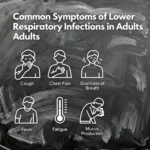
Common symptoms of a lower respiratory infection include:
• Persistent cough (sometimes with phlegm, sometimes without)
• Difficulty breathing
• Chest pain
• Fever
• Fatigue or weakness
Important: If these symptoms worsen or do not improve, you should see a doctor immediately.
What causes lower respiratory infections, and how are they treated?
These infections are caused by viruses (such as influenza or RSV) and bacteria (such as Streptococcus pneumoniae).
Treatment depends on the cause:
• Viral infections: Usually resolve with rest, drinking water, and basic care.
• Bacterial infections: Sometimes antibiotics are needed.
How do lower respiratory infections affect children under five?
Young children are more vulnerable because their immune systems are not yet strong.
So infections can be serious or sometimes life-threatening in them.
How can I prevent lower respiratory tract infections?
To avoid lower respiratory infections, follow some simple prevention steps:
• Maintaining good hygiene (washing hands, wearing a mask)
• Avoiding polluted or crowded places
• Getting vaccinated (such as the flu vaccine, pneumococcal vaccine)
• Maintaining a healthy lifestyle to keep your immunity strong (healthy diet, exercise, proper sleep)
Are there home remedies for mild lower respiratory infections?
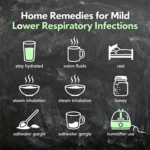
Yes, mild infections often clear up on their own if you:
• Rest
• Drink plenty of water (stay hydrated)
• Use a humidifier
• Inhale hot steam
• Take over-the-counter medicines for fever or pain
But if symptoms persist or become severe, it’s important to see a doctor immediately.
Lower Respiratory Diseases and COPD comparison table:
Learn all about COPD—click here.
| Feature | Lower Respiratory Diseases (e.g., pneumonia, bronchitis) | COPD (Chronic Obstructive Pulmonary Disease) | Similarities | Risk Level & Detection |
|---|---|---|---|---|
| Nature | Acute or chronic infections affecting lower lungs and airways | Chronic, progressive disease causing permanent airflow obstruction | Both affect lower lungs and airways | Lower respiratory disease: Can happen suddenly, risk higher in children, elderly, smokers, people with weak immunity. COPD: Long-term risk, mostly in smokers or polluted environments; develops slowly over years. |
| Cause | Bacteria, viruses, fungi, pollution, smoking | Long-term smoking, pollution, genetic factors (e.g., alpha-1 antitrypsin deficiency) | Smoking and pollution can affect both | Lower respiratory disease: Detected via sudden symptoms, fever, lab tests (blood, sputum, X-ray). COPD: Detected via chronic symptoms, lung function tests (spirometry), imaging. |
| Symptoms | Cough, fever, shortness of breath, chest pain, sputum | Chronic cough, shortness of breath, wheezing, sputum production | Cough, breathlessness, fatigue, wheezing common | Symptoms help distinguish: acute fever & sudden onset = infection, chronic persistent cough & gradual worsening = COPD. |
| Progression | Usually short-term; resolves with treatment (except chronic forms) | Slow, progressive, permanent lung damage | Both cause breathing problems and fatigue | Monitor symptom duration: sudden vs long-term trends help differentiate. |
| Exacerbation | Infection triggers worsen symptoms | Infections (like pneumonia) trigger flare-u |

- Nipah Virus: A Complete Guide to Symptoms, Treatment, and Prevention (2025 Update) - March 18, 2026
- Nipah Virus Mortality Rate and Survival Chances: A Comprehensive 2025 Guide - February 9, 2026
- Warning Signs Your Body Uses to Show Health Issues - February 2, 2026
1 thought on “Lower Respiratory Infections: Bronchitis and Pneumonia.”