
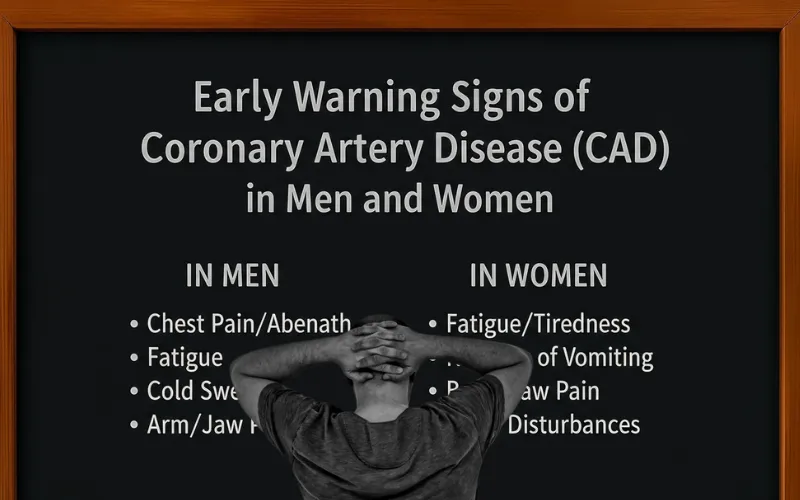
Coronary artery disease (CAD) is a major cause of death worldwide, and neither men nor women can escape it; it affects both. The most dangerous thing is that it develops slowly, without alarming anyone, without any obvious symptoms. Early warning signs are often ignored or misinterpreted, especially in women, because their symptoms can be quite different from the “classic” chest pain in men. That’s why recognizing the early warning signs of coronary artery disease is critical.
Table of Contents
Understanding these early signs can literally save your life. In fact, research shows that 45% of heart attacks occur in people who had no prior symptoms. CDC, Cleveland Clinic.
What is Coronary Artery Disease?
CAD occurs when coronary arteries, the blood vessels that carry oxygen-rich blood to the heart, become narrowed or blocked by plaque (fatty deposits). Gradually, this restricts blood flow, which can lead to chest pain, difficulty breathing, a heart attack, or, rarely, sudden death.
In the U.S. alone, CAD affects over 18 million adults, and in 2021 it claimed more than 375,000 lives, making it the country’s top killer Cleveland Clinic. This is why paying attention to the early warning signs of coronary artery disease in men and women is so important.
Click here to explore our full guide on Coronary Artery Disease (CAD).
Why CAD is Called the “Silent Killer”
CAD often develops silently, without any obvious signs. You may think everything is normal, nothing is different, or you’re perfectly healthy, but plaque is quietly building up in your arteries. Silent ischemia means the heart isn’t getting enough oxygen, but you don’t feel pain—yet it can cause long-term damage to the heart. That’s why we call it the silent killer.
- About 45% of heart attacks do not show any warning symptoms. CDC. This is why paying attention to the early warning signs of coronary artery disease in men and women is so important.
- Silent ischemia is more common in women, older adults, and people with diabetes. CVRTI, Felix Hospital.
How CAD Differs Between Men and Women
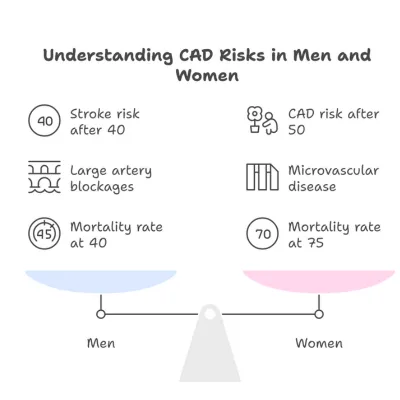
Men
- The risk of developing a stroke is higher after age 40.
- Major blockages can occur in large arteries.
- By age 40, half of people are at risk for stroke. StatPearls.
Women
- Estrogen protects the heart until menopause, but the risk of CAD increases significantly after 50.
- Women are more affected by small blood vessels (microvascular disease).
- By the age of 75, the death rate from CAD in women is equal to or higher than that in men. Lipid.org, IJCDW.
Understanding these differences is key to spotting the early warning signs of coronary artery disease in men and women.
Early Warning Signs in Men (Typical Symptoms)
These are the classic early warning signs of coronary artery disease in men. Men often present with the “classic” heart symptoms:
- Chest pain or angina feels like something is pressing on the chest—crushing, squeezing, or “elephant sitting on the chest” type of pain. NHS.
- Pain may spread to the left arm or shoulder.
- Exertion or exercise may cause shortness of breath.
- Sweating is common with chest pain.
- Sometimes, it can also be triggered by sudden physical or emotional stress. Advocate Health.
Early Warning Signs in Women (Often Atypical)
These are the classic early warning signs of coronary artery disease in women. Women’s symptoms are more subtle and can easily be mistaken for something else:
• Unusual fatigue- 70% of women experience this before a heart attack.
• Sleep problems- 48% have new insomnia or restless sleep.
• Shortness of breath- even at rest, sometimes without chest pain.
• Indigestion or nausea- not related to eating, often mistaken for a stomach problem.
Other red flags in women:
- Pain may also occur in the back, jaw, neck, or shoulders. American Heart Association
- Anxiety, dizziness, or a feeling that “something bad is about to happen” may also be symptoms.
- Cold sweats without any reason can also be a symptom of heat.
(These early warning signs of coronary artery disease in women are easy to miss or mistake for non-cardiac problems.)
Silent Heart Attacks
In a silent heart attack, there is heart damage, but there is no severe chest pain.
Subtle signs may include:
- A feeling of a muscle pull in the chest or back
- Jaw or back discomfort
- Prolonged fatigue
- Slight shortness of breath Harvard Health.
Silent heart attacks are more common in women and people with diabetes. according to Duke Health.
Risk Factors You Should Know
Major Risk Factors (Men & Women)
- High blood pressure
- High cholesterol
- Diabetes (raises CAD risk 2.5x)
- Smoking
- Family history
- Obesity CDC.
Risk Factors Especially Important in Women
- Early menopause also increases the risk.
- Pregnancy complications such as gestational diabetes or preeclampsia also increase the risk.
- Autoimmune diseases (lupus or rheumatoid arthritis) increase the chance of CAD.
- Depression and anxiety can also affect heart health. Mayo Clinic.
When to Seek Emergency Help
Call an ambulance immediately if you see these early warning signs of coronary artery disease in men and women:
- Chest pain lasting more than 15 minutes
- Severe shortness of breath
- Pain spreading to arm, back, jaw, or neck
- Cold sweats, nausea, or dizziness NHS, AHA.
For women: If you experience sudden fatigue, shortness of breath, or back pain, don’t ignore it.
Prevention Strategies
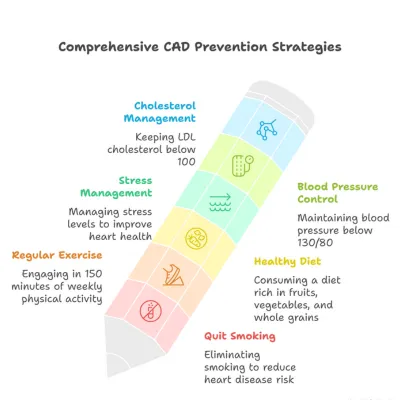
The good news: CAD is largely preventable.
- Quit smoking.
- Exercise at least 150 minutes per week.
- Eat a diet rich in fruits, vegetables, and whole grains.
- Manage stress and get good sleep.
- Keep your blood pressure below 130/80 and LDL cholesterol below 100. CDC, American Heart Association.
Key Takeaways
Men: Pay attention to classic crushing chest pain, but don’t ignore mild symptoms.
Women: Be alert to subtle signs like fatigue, shortness of breath, and pain in an unexpected location.
For everyone: If something feels wrong, trust your feelings and get a check-up.
Recognizing the early warning signs of coronary artery disease in men and women can save lives. CAD is not always obvious, so it’s important to understand the differences in symptoms between men and women.
What are the early warning signs of coronary artery disease?
The early symptoms of CAD can be different in men and women.
Men often experience classic chest pain or pressure.
While women may experience unusual fatigue, shortness of breath, or discomfort in the back, jaw, or shoulders.
How can I recognize coronary artery disease signs early?
Pay attention if you experience persistent chest discomfort, shortness of breath, excessive fatigue, cold sweats, or nausea.
Regular check-ups and monitoring of blood pressure, cholesterol, and blood sugar help detect CAD early.
What are subtle heart attack symptoms in women?
Women may experience fatigue, sleep problems, indigestion, light breathing, or pain in the back, jaw, or shoulders, sometimes without chest pain.
What are the warning signs of heart disease in men over 40?
Men over 40 should be cautious if they experience severe chest pain, pain radiating to the arms, difficulty breathing, cold sweats, or nausea.
Minor or occasional symptoms should also not be ignored.
What are silent heart attack indicators for men and women?
A silent heart attack doesn’t cause severe chest pain.
Pay attention if there’s prolonged fatigue, mild discomfort in the chest, back, or jaw, or shortness of breath—even at rest.
Women and people with diabetes are at higher risk.
Click here to explore our full guide on Coronary Artery Disease (CAD).

- Nipah Virus: A Complete Guide to Symptoms, Treatment, and Prevention (2025 Update) - March 18, 2026
- Nipah Virus Mortality Rate and Survival Chances: A Comprehensive 2025 Guide - February 9, 2026
- Warning Signs Your Body Uses to Show Health Issues - February 2, 2026