
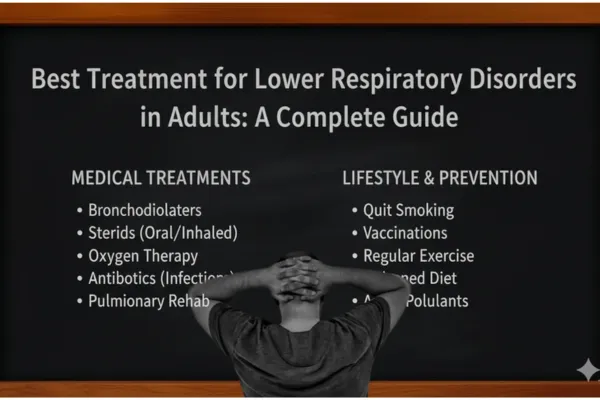
Before we can determine the best treatment for lower respiratory disorders in adults, it’s important to understand that treatment is different for everyone. It depends on your exact condition, the severity of the illness, and your overall health. What works for one person may not necessarily work for another. Therefore, it’s crucial to develop a treatment plan in collaboration with your doctor.
Table of Contents
Lower respiratory disorders affect millions of people worldwide. These illnesses range from mild infections like acute bronchitis to more serious chronic diseases like COPD and pulmonary fibrosis. If you know the best treatment options for these illnesses, you can work with your doctor to control your symptoms, improve your quality of life, and prevent future complications.
Click here to know everything about lower respiratory disorders.
Best Treatment for Lower Respiratory Disorders in Adults
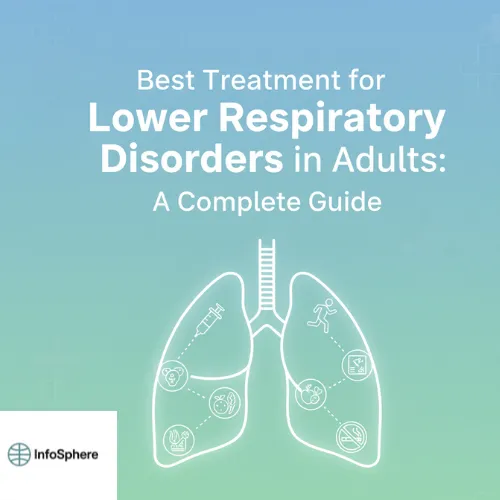
The main goals of treatment are to:
- Treat all infections that can be cured (such as bacterial pneumonia or fungal infections) appropriately.
- Reduce symptoms such as cough, chest pain, and difficulty breathing.
- Prevent worsening of the disease or the development of new complications.
- Improve your daily life and overall quality of life.
- Slow down the progression of the disease if it is chronic.
- Prevent flare-ups (sudden worsening of the disease) and the need to go to the hospital.
(NHS Trust, 2025, StatPearls, 2023)
Treatment Success Rates for Lower Respiratory Disorders in Adults
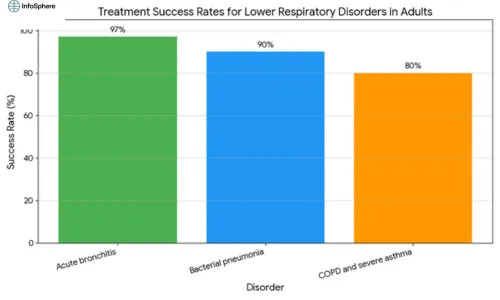
- Acute bronchitis: You will be happy to know that about 97% of people recover completely, as most of the cases are viral and get cured on their own.
- Bacterial pneumonia: With early diagnosis and timely initiation of antibiotic treatment, approximately 90% of people recover successfully.
- COPD and severe asthma: With timely and proper treatment, symptoms are well controlled in about 75-85% of people. (WebMD, 2025)
- Pulmonary fibrosis: Sadly, the recovery rate is low, as treatment only slows the progression of the disease but cannot reverse lung damage. (PMC, 2023)
Medication Treatments for Lower Respiratory Disorders in Adults
Bronchodilators
These medications relax airway muscles, making breathing easier. They are the foundation of COPD and asthma treatment.
Short-acting (rescue inhalers): Such as Albuterol (Ventolin, ProAir) and Levalbuterol (Xopenex). These start to work within a few minutes and last for 4–6 hours.
Long-acting (maintenance inhalers): Such as Tiotropium (Spiriva) and Salmeterol (Serevent). These are taken daily to prevent flare-ups (sudden worsening of the disease).
Corticosteroids
Reduce airway inflammation.
Inhaled steroids: Such as budesonide (Pulmicort) and fluticasone (Flovent). These are safe for long-term use, but mouth rinses are necessary to prevent thrush.
Oral steroids (short courses): such as prednisone. These are used for severe flare-ups but may have more side effects.
(Healthline, 2018, Medical News Today, 2023)
Combination Inhalers
Combination inhalers contain both a bronchodilator and a steroid, which provides better control of both symptoms and flare-ups. Examples: Symbicort, Advair, Trelegy.
Antibiotics used in Treatment of Lower Respiratory Disorders in Adults
Used only for bacterial infections like pneumonia.
- Mild–moderate pneumonia: Antibiotics like azithromycin, amoxicillin + clarithromycin, or doxycycline are used.
- Severe pneumonia: IV antibiotics are used for the treatment, antibiotics like levofloxacin or piperacillin/tazobactam.
Oxygen Therapy used in Treatment of Lower Respiratory Disorders in Adults
Patients with drastically low oxygen levels (below 88%). Proven to extend life in severe COPD.
- Methods: Methods like nasal cannula, face mask, high-flow nasal cannula, and non-invasive ventilation are used.
- Long-term therapy: Taking oxygen therapy for at least 15 hours a day prolongs life and reduces the need for hospitalization.
(PMC, 2009; Cleveland Clinic, 2025)
Pulmonary Rehabilitation
This is an organized program that combines exercise, breathing training, education, and emotional support.
Benefits:
- Breathing becomes easier
- Exercise capacity increases
- Hospitalization decreases
- Mental health improves
(Cleveland Clinic, 2025, American Lung Association, 2025)
Treatment by Condition
- Pneumonia: Antibiotics if caused by bacteria, antivirals or supportive care if caused by a virus. (ALA, 2025)
- COPD: Long-acting inhalers, steroids if flare-ups are frequent, oxygen therapy, and a rehab program. (NHS, 2025)
- Asthma: Rescue inhalers and steroids are used, and biologics are used in severe cases.
- Acute Bronchitis: Prolonged rest, drinking plenty of water, and cough suppressants—only supportive care is sufficient. (WebMD, 2024)
Non-Medication Treatments used in Treatment of Lower Respiratory Disorders in Adults
- Home care: Effective home care like rest, fluids, humidifiers, and steam inhalation. (Healthline, 2017)
- Breathing techniques: Techniques like pursed-lip and diaphragmatic breathing are helpful. (HOD, 2024)
- Nutrition: Ginger, garlic, honey, and warm teas are helpful. (MNT, 2024)
Advanced Options
- Ventilation: Non-invasive devices such as CPAP or BiPAP are used to help with breathing, and in emergencies, invasive ventilation through a breathing tube is used.
- Surgery: In end-stage COPD, reducing lung volume or performing a lung transplant is an option.
Prevention & Lifestyle
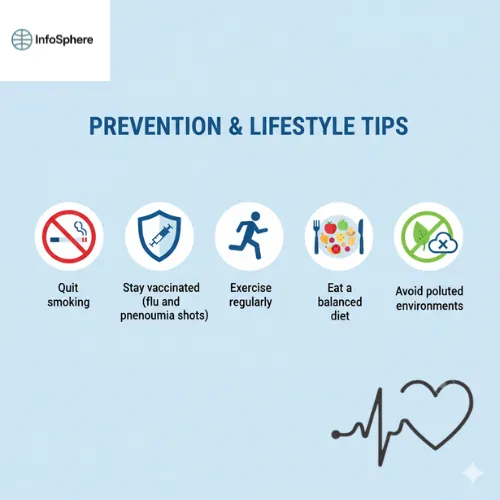
- Quit smoking
- Stay vaccinated (flu and pneumonia shots)
- Exercise regularly
- Eat a balanced diet
- Avoid polluted environments
Key Takeaways
- Treatment is individualized for each patient and condition.
- Starting treatment early improves outcomes.
- Combination therapy is often most effective for chronic lung conditions.
- Pulmonary rehabilitation and lifestyle changes are as important as medications.
- The best approach is to develop a personalized plan with your healthcare team.
What are the early signs of lower respiratory disorders?
If you have a persistent cough, difficulty breathing, chest tightness, or increased fatigue, these could be early signs of a lower respiratory disorder. Early detection makes treatment easy and effective.
How does pulmonary rehabilitation help in chronic lung diseases?
Pulmonary rehab is a special program that includes breathing exercises, light physical activity, and health education. This helps you breathe easier, tolerate daily exercise, and improve your overall quality of life and confidence.
Differentiate between short-acting and long-acting Inhalers for COPD and asthma.
Short-acting inhalers provide immediate relief when breathing problems or a severe cough occur, and they last for 4–6 hours. Long-acting inhalers, used daily, prevent flare-ups and keep daily symptoms under control.
Antibiotics vs Antivirals in Treating Pneumonia
If the pneumonia is caused by bacteria, antibiotics are given to treat the infection directly. If it is caused by a virus, antivirals or supportive care (such as rest, fluids, and mild medications) is given. Treatment type depends on the infection.
Click here to know everything about lower respiratory disorders.

- Nipah Virus: A Complete Guide to Symptoms, Treatment, and Prevention (2025 Update) - March 18, 2026
- Nipah Virus Mortality Rate and Survival Chances: A Comprehensive 2025 Guide - February 9, 2026
- Warning Signs Your Body Uses to Show Health Issues - February 2, 2026