
Atopic dermatitis, or eczema, is a common skin problem. More than 31 million people are affected by it in America alone, and many people worldwide suffer from it too. In this condition, the skin becomes very itchy, red, and dry and appears cracked.
While doctors’ treatments are effective, many people are now moving towards herbal remedies, which have been used in old traditions. These natural treatments soothe the skin, have fewer side effects, and in some cases, can be a good gentle option instead of steroid creams
“Best Home Remedies for Eczema Flare-Ups in Children”
Understanding Best Herbal Remedies for Eczema
Eczema is a long-term skin problem. It occurs when the skin’s natural protection weakens and the immune system starts to react adversely. Normal medicines often only control the symptoms. Herbal remedies do not just provide superficial relief; they help to heal the skin from within.
Herbal remedies work by balancing the entire body.

They:
• reduce inflammation in the body’s cells
• strengthen the skin’s natural protection
• balance the immune system
• protect the skin by providing antioxidants
• moisturize and heal dry or damaged skin
Research shows that herbal treatments can be quite effective. In some studies, their results have been found to be almost equivalent to standard medical treatments.
Top Evidence-Based Herbal Remedies for Eczema
1. Turmeric (Curcuma longa): The Golden Healer
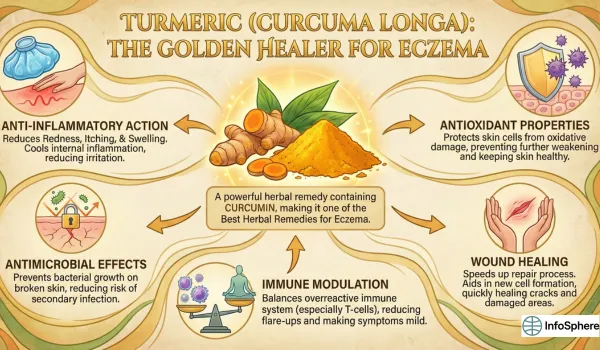
Turmeric is a very strong herbal remedy for eczema because it contains a powerful compound called curcumin. Turmeric is one of the Best Herbal Remedies for Eczema.
Key Benefits:
• Anti-inflammatory action: Turmeric reduces redness, itching, and swelling. In Eczema, the skin is inflamed internally, turmeric cools down that inflammation. This also reduces irritation
• Antioxidant properties: The skin’s cells undergo oxidative damage, which further weakens the skin. Turmeric’s antioxidants protect the cells, so the skin does not get damaged quickly and remains healthy
•Antimicrobial effects: In Eczema, the skin breaks, due to which bacteria easily cause infection. Turmeric does not allow germs to grow, which reduces the risk of secondary infection
• Wound healing: Turmeric speeds up the skin’s repair process. It helps in the formation of new cells, due to which cracks and damaged areas heal quickly
• Immune modulation: In Eczema, the immune system overreacts. Turmeric keeps immune cells, especially T-cells, in balance. This reduces flare-ups and makes symptoms mild.
How to Use:
• Topical use (for applying on the skin): Mix turmeric powder in rose water or coconut oil to make a paste. This is applied directly to the Eczema area. It calms redness, itching, and swelling
• Internal use (for consuming internally): Golden milk (turmeric milk) can be drunk, or turmeric can be used in daily meals. Internally, turmeric controls inflammation and immune imbalance
• Dosage: Taking about 1 teaspoon of turmeric daily is fine. The paste for applying on the skin can be used 2–3 times a week.
2. Calendula (Calendula officinalis): The Skin Soother
Calendula is also one of the Best Herbal Remedies for Eczema. It is a herb renowned for healing the skin. It soothes minor wounds, dryness, redness, and irritation. In eczema, it calms the skin and speeds recovery.
Active Compounds: Flavonoids, triterpenoids, carotenoids, saponins.
Benefits:
• Inflammation aur irritation kam karta hai:
Calendula skin ko soothe karta hai. Eczema me jo burning, redness aur itching hoti hai, usko halka kar deta hai.
• Skin barrier ko strong banata hai aur hydration deta hai:
Eczema me skin ka natural barrier toot jata hai. Calendula skin ko moisturize karta hai, uski outer layer ko repair karta hai, aur pani ko andar lock karke dryness ko kam karta hai.
• Antimicrobial action:
Jab skin toot jati hai to infection ka risk badh jata hai. Calendula bacteria ko grow hone se rokta hai, jisse secondary infection nahi hoti.
How to Use:
• Calendula cream: It can be applied 2–3 times a day on the Eczema area. It soothes the skin and makes healing fast.
• Oil infusion or compress: Oil made from Calendula flowers can be applied, or cooled Calendula tea can be kept on the skin like a compress using cotton. This significantly calms dryness, redness, and itching.
3. Chamomile (Matricaria chamomilla): Gentle Anti-Inflammatory
Chamomile is also a Best Herbal Remedies for Eczema treatment. It has a strong ability to reduce inflammation. It also soothes itching very quickly. Therefore, using chamomile for eczema provides significant relief to the skin. (researchgate.net)
Clinical Evidence: Topical chamomile cream can be up to 60% as effective as 0.25% hydrocortisone cream.
Usage:
• Topical ointments and creams: Creams or ointments containing Chamomile can be applied directly to the Eczema area. They calm itching and redness.
• Cool compresses with chamomile tea: Make chamomile tea and let it cool down. Then dip cotton or a clean cloth and keep it on the skin for 5–10 minutes. This instantly soothes irritation and burning.
• Bath additives: Chamomile tea or chamomile extract can be added to bath water. This reduces itching and dryness of the entire body.
• DIY infused oils: At home, you can make infused oil by soaking chamomile flowers in a carrier oil (like coconut or olive oil). This is good for massage on dry and irritated skin.
4. Aloe Vera (Aloe barbadensis): Cooling and Moisturizing
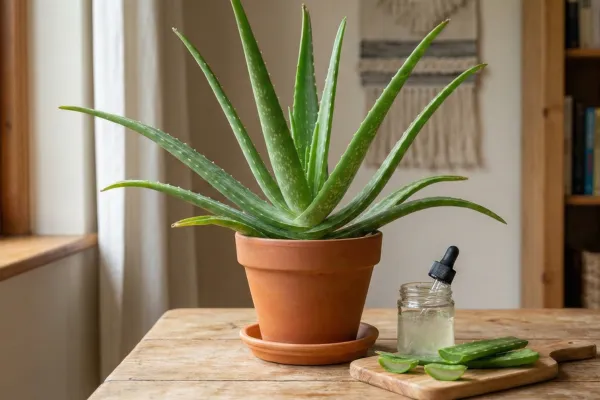
Aloe vera provides deep hydration, reduces inflammation, and helps damaged skin heal faster. It soothes both irritation and dryness in eczema.
How to Use: Aloe vera provides deep hydration, reduces inflammation, and helps damaged skin heal faster. It soothes both irritation and dryness in eczema.
5. Licorice Root (Glycyrrhiza glabra): Anti-Inflammatory Support
Licorice root (mulethi) reduces irritation in eczema, soothes itching, and helps the skin heal. It calms the skin and brings flare-ups under some control.
Usage:
• Topical gels or creams: Gels or creams made from Mulethi (licorice) can be applied directly to the eczema area. They reduce itching and redness.
• Use with other herbs: Mixing Mulethi with aloe vera, calendula, or chamomile can strengthen the effect. This combination soothes the skin more quickly and accelerates healing.
6. Neem (Azadirachta indica): Purifier and Protector
Neem prevents infections, reduces inflammation, and balances the immune system. These three properties are very helpful for eczema, making it a powerful natural remedy.
Uses:
• Neem oil or neem paste: Neem oil or neem leaf paste can be applied to the eczema area. This reduces redness, itching, and the risk of infection.
• Neem capsules (inside): Neem capsules help balance the immune system. They help keep flare-ups under control.
7. Manjistha (Rubia cordifolia): Blood Purifier
Manjistha helps purify the blood, reduces skin inflammation, and supports the proper functioning of the lymphatic system.
For eczema, these three benefits help calm the skin from within. Thats why it is considered as one of the best herbal remedies for eczema.
Application:
• Topical paste or oil: Manjistha paste (powder + water or rose water) or Manjistha-infused oil can be applied to eczema areas. This slowly reduces redness, itching, and inflammation.
• Internal use (only under expert guidance): Manjistha can also be taken internally, but it should always be done under the guidance of an Ayurvedic doctor or professional. It detoxifies the body and supports the skin from within.
Herbal Combinations and Synergistic Effects
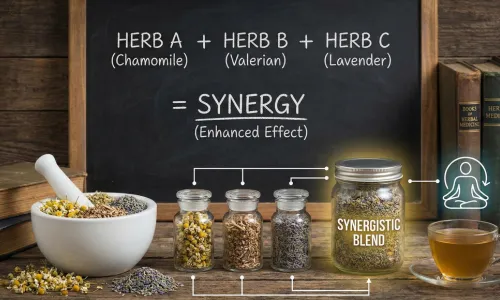
• Ayurvedic options: Khadirarishta and Manjisthadi Kwath: Both of these are used in Ayurveda. They detoxify the body, reduce inflammation, and support the skin from within. They should always be taken only on the advice of an Ayurvedic doctor.
• Triple Herb Blend (Aloe vera + Manjistha + Neem + Turmeric + Rose water): This is a powerful mix that is very effective for eczema. Aloe vera soothes, Manjistha detoxifies, Neem prevents infection, Turmeric reduces inflammation, and Rose water cools the skin. It can be made into a paste or gel and applied to the skin.
• European Blend (Calendula + Chamomile + Licorice Root): This combination calms the skin, reduces itching, and promotes fast healing. Calendula reduces redness, Chamomile soothes itching, and Licorice keeps inflammation under control — all three together provide strong relief.
Safe Usage and Lifestyle Integration
Preparation Methods (How to Make and Use):
Lets understand how the best herbal remedies for eczema is made. Herbal remedies can be made and used in some simple ways. To make oils, herbs are infused in oil and then applied to the skin. Pastes are prepared by mixing powder with water, rose water, or aloe vera gel. In compresses, herbal tea is cooled and placed on the skin with the help of cotton. Herbal tea or extracts can also be mixed into bath water and used as a bath additive, which relaxes the entire body. For internal use, herbal teas like neem, chamomile, manjistha, and turmeric tea can be taken, along with neem, manjistha, or turmeric capsules and concentrated tinctures.
Adding turmeric, aloe juice, or herbal drinks to the daily diet is also beneficial. It is good to do a patch test before starting any method, always seek a doctor’s advice during pregnancy, and it is necessary to check first if there is a possibility of allergy to any herb.
Lifestyle Tips:
You can support eczema control with a few steady lifestyle habits. An anti-inflammatory diet helps a lot, so include turmeric, ginger, omega-3 foods, fruits and vegetables, and keep spicy, fried and sugary foods on the lower side. Staying well hydrated through the day reduces skin dryness. Gut health matters too; curd, probiotics and fiber-rich foods keep digestion stable, which often keeps the skin calmer. Stress management also plays a role, since stress triggers flare-ups, so make some room for yoga, meditation or simple deep-breathing.
Your skincare routine should stay gentle: avoid harsh soaps, pick mild cleansers and use a good moisturizer every day. Wear cotton or other breathable fabrics because synthetic materials tend to increase itching. Lastly, try to maintain moderate humidity in your room, since dry air makes eczema worse and a humidifier usually helps.
Conclusion
Best Herbal Remedies for Eczema offer a gentle, time-tested way to handle eczema. Research has found turmeric to be approximately 70% effective, calendula 65% effective, and chamomile 62% effective. If these herbs are used along with the right lifestyle habits—such as an anti-inflammatory diet, stress control, proper skincare—and with the guidance of a doctor, they can truly help heal the skin.
Flare-ups are reduced, skin becomes stronger, and daily life becomes a little easier.
“Click here to read this blog in Hindi”
What is the fastest-acting home herb for eczema?
Most people find the fastest relief from Neem and Calendula. Neem paste or neem oil is anti-inflammatory and antibacterial, quickly reducing both itching and infection. Calendula cream or an infusion of fresh flowers soothes inflammation very quickly. Both can be effective within 2-3 days.
Does turmeric really work for eczema? How to use it?
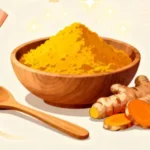
Yes, absolutely! Turmeric contains curcumin, which is a very powerful anti-inflammatory.
Method: Make a paste by mixing 1 teaspoon of organic turmeric powder and 1-2 teaspoons of coconut oil or honey. Apply to the affected area for 15-20 minutes and then rinse with lukewarm water. Do this 3-4 times a week. If you’re worried about scarring, apply it at night and wash it off in the morning.
Does colloidal oatmeal bath really work or is it just hype?
This isn’t hype, it’s science. Colloidal oatmeal is an FDA-approved topical treatment for eczema. It repairs the skin barrier and reduces itching by 70-80%.
How to: Add 1 cup of finely ground oats to a tub of lukewarm water, soak for 15-20 minutes. Do this 3 times a week – 100% safe, even for children.
Everyone uses Aloe Vera, but which one is best for eczema and how to apply it?
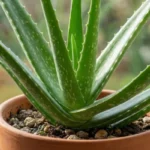
Use pure, 100 percent organic aloe vera gel taken directly from the leaf, not the flavored or colored market versions.
Best trick: keep it in the fridge and apply a thin layer three to four times a day. At night, apply a thicker layer and leave it on. It gives both cooling and healing. If the eczema is very dry, mix aloe with a few drops of sandalwood oil or licorice root oil. You’ll see a difference in about a week.

- Nipah Virus: A Complete Guide to Symptoms, Treatment, and Prevention (2025 Update) - March 18, 2026
- Nipah Virus Mortality Rate and Survival Chances: A Comprehensive 2025 Guide - February 9, 2026
- Warning Signs Your Body Uses to Show Health Issues - February 2, 2026