
Eczema is quite common in children; I faced it in my own childhood, and perhaps you have too. Globally, approximately 10–20% of children suffer from it. When eczema flares up, it causes a lot of itching, redness, and discomfort. This troubles the children and causes anxiety for the parents. People use many random and ineffective remedies for it, which often make the condition worse instead of healing it. Treatment from a doctor is essential, but some simple home remedies can provide significant relief during a flare-up and help prevent future occurrences.
“If you want to read this topic in Hindi, you can open the Hindi version here.”
Table of Contents
Understanding Eczema in Children
Before we learn about the best home remedies for eczema, let’s first understand a few things about eczema. Eczema, also known as atopic dermatitis, is a chronic skin condition in which the skin becomes dry, itchy, and red. In children, it often begins around three months of age. Initially, it is mostly seen on the cheeks, then it can gradually spread to other parts of the body. It is not necessary that it only occur in children; it can also affect adults. People who have not had it before have a higher chance of developing it. In many cases, it has been observed that its symptoms fluctuate, coming and going.
Common Locations by Age
The biggest sign of eczema is very intense itching. When a flare-up occurs, the skin can become red and look like an open wound, and sometimes, a slight moisture or watery discharge may also seep out. Eczema can affect any area of the skin, but the symptoms and affected areas may depend on your child’s age.
• Infants: Cheeks, face, outer arms and legs
• Older children: Joint creases (elbows, wrists, knees)
• Pattern: Usually symmetrical on both sides of the body
Best Home Remedies for Eczema: Essential Bathing Techniques
Proper Bathing Method
This is the most important step for controlling eczema. Giving children with eczema a daily gentle bath is beneficial because:
The skin gets cleaned: The bath removes settled dust, sweat, and dirt from the skin, which further irritates the eczema.
Germs and bacteria are removed: In eczema, the skin is weak, so germs attack easily. A bath washes them away.
Allergy-causing particles also go away: Pollen, dust mites, or allergies to any substance—all get washed out with water.
The skin receives hydration: After bathing, the skin naturally soaks up water.
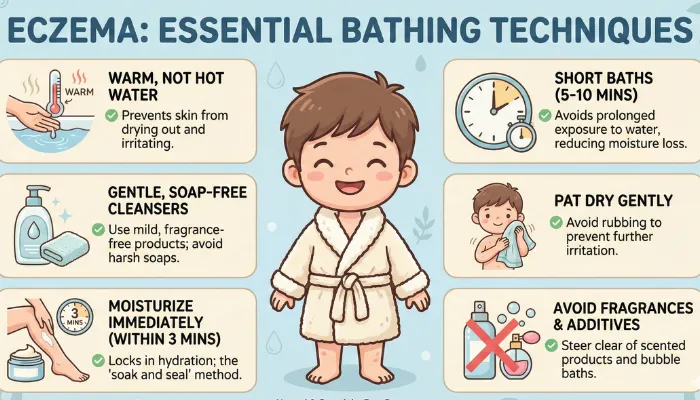
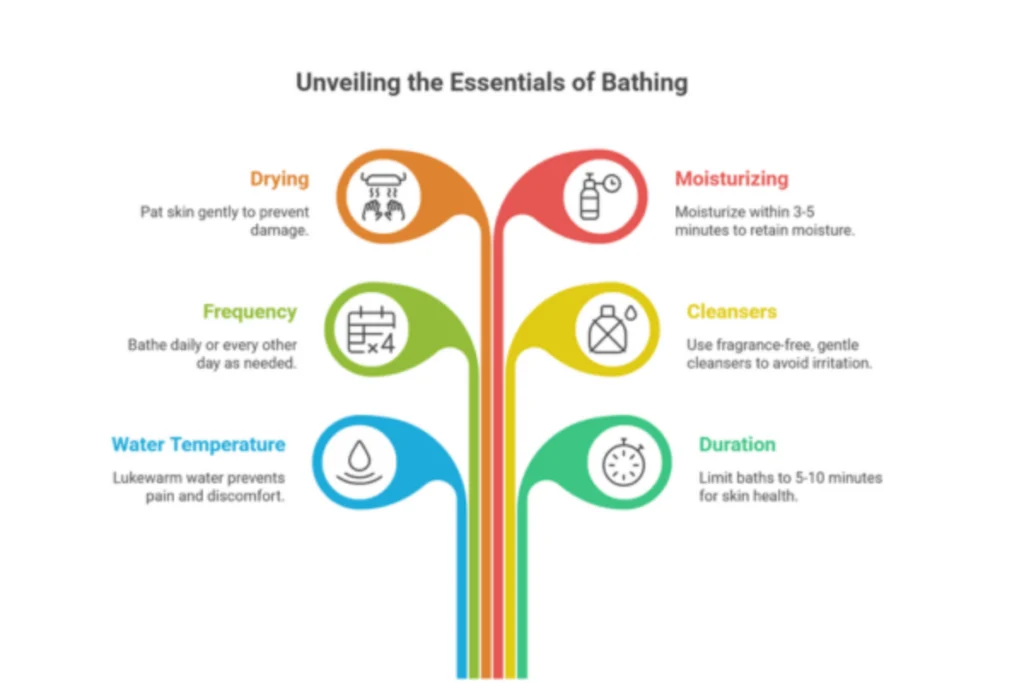
Bathing Guidelines:
• Water temperature: Lukewarm, hot water can cause pain.
• Duration: 5-10 minutes
• Frequency: Daily or every other day
• Cleansers: Fragrance-free, gentle options
• Drying: Pat gently, avoid rubbing
• Moisturizing: Apply within 3-5 minutes of bathing
Colloidal Oatmeal Baths
Colloidal oatmeal has antioxidant and anti-inflammatory properties. In simple words, it calms the skin, reduces redness and itching, and soothes irritated skin. That is why it is considered very effective for children with eczema.
How to Use:
Using colloidal oatmeal is very easy. Just mix a little oatmeal in lukewarm water and let the child soak gently in it for 10–15 minutes. This provides soothing relief to the skin and reduces itching. After bathing, do not rub the skin with a towel; simply pat it dry gently so that the skin remains slightly damp. Then, apply moisturizer within 3 minutes so that hydration is locked into the skin and the eczema flare-up remains under control.
Bleach Baths (Medical Supervision Only)
A diluted bleach bath reduces skin germs and also decreases inflammation. In simple words, it makes the water so mild that bacteria are removed, and the skin does not become overly irritated. In children with eczema, this helps in controlling flare-ups.
• How: Add ½ cup household bleach to a full tub of lukewarm water
• Important: Always consult your pediatrician before use
The “Soak and Seal” Method
Soaking the child in lukewarm water for 5–10 minutes is helpful because it softens the skin and removes germs. After the bath, do not rub the skin hard with a towel; just pat it dry gently so that the skin remains slightly damp. If the doctor has given any medicine, apply it only to the affected areas. On the rest of the skin, it is necessary to apply moisturizer within 3 minutes so that moisture is locked into the skin and dryness, itching, and flare-ups are kept to a minimum. This can reduce the need for stronger medications and improve outcomes.
Wet Wrap Therapy: Intensive Home Treatment
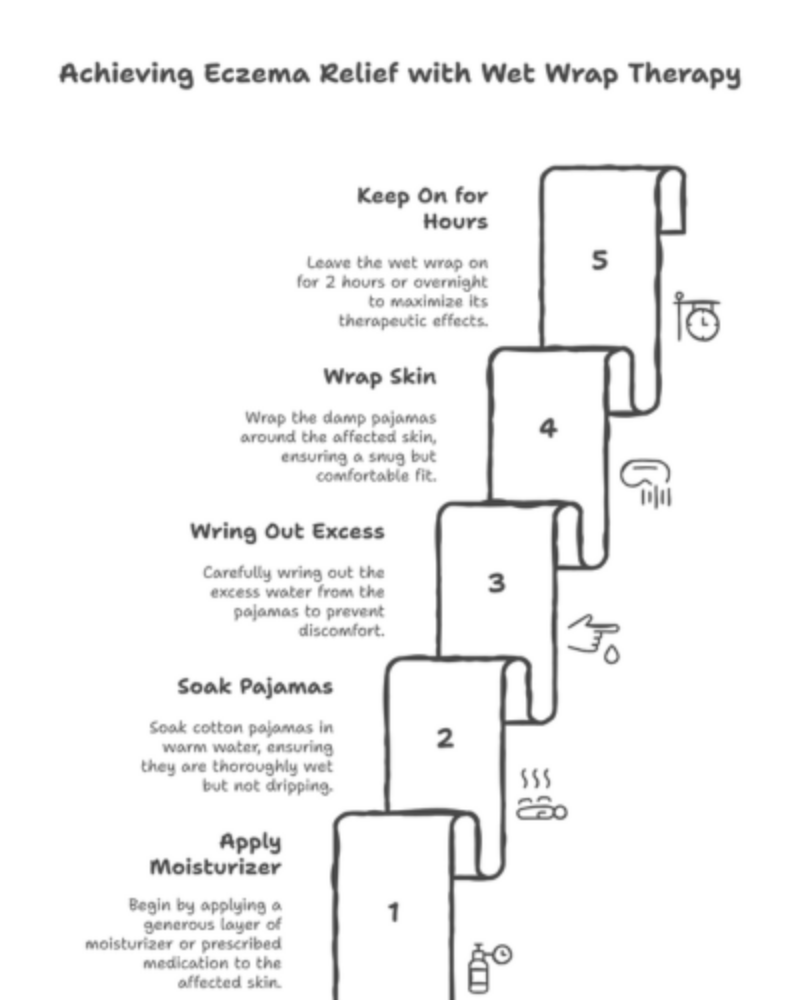
Wet wrap therapy is considered very effective for severe eczema flare-ups. It can also be done at home, provided the basic guidance of a doctor or nurse is followed. In this therapy, moisturizer or medicine is applied first, then a lightly wet cloth or bandage is wrapped around the skin. This provides extra hydration to the skin, itching calms down quickly, and redness reduces rapidly.
Benefits:
• Rapid symptom relief (24-48 hours)
• Better sleep, less nighttime scratching
• Enhanced medication absorption
• Reduced need for oral medications
How to Apply:
• Follow the soak and seal method
• Soak cotton pajamas in warm water, wring out excess
• Keep on 2 hours or overnight
“For a clear step-by-step demo, check out this wet wrap therapy guide here.”
Natural Moisturizers and Best Home Remedies for Eczema
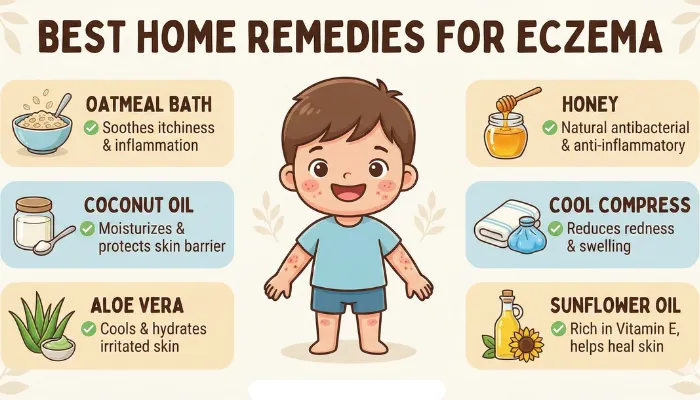
Coconut Oil
Virgin coconut oil is considered safe for infants. It has antimicrobial properties, which reduce germs, and it also strengthens the skin barrier. This oil gets absorbed quickly into the skin, which provides relief from both dryness and itching. Applying it on slightly damp skin 2–3 times a day is the most effective approach.
Other Natural Oils
• Sunflower seed oil: Locks in moisture; apply after baths.
• Aloe vera: Soothes itchy skin, can be used before wet wraps.
Homemade Eczema Cream
Ingredients:
• ¼ cup shea butter
• 2 tbsp coconut oil
• 1 tsp ground oatmeal
Instructions: First, slightly melt the shea butter and coconut oil. When the mix cools down a little, then add oatmeal to it. Let this mixture set so that it comes into a solid form. Before using it, definitely do a small patch test so that you can know whether it suits the child’s skin or not.
Immediate Relief Techniques
• Cool compresses: Apply damp cloth for 10-15 minutes
• Distraction for older children: Games, stories, gentle tapping
• For infants/toddlers: Eczema mittens, short nails, gentle pinching
Dietary Considerations
In some children, food allergies can trigger eczema. This problem is observed in approximately 20–30% of children with moderate or severe eczema. The most common allergy foods are: cow’s milk, eggs, peanuts, tree nuts, soy, fish or shellfish, and wheat or gluten. But keep in mind—never remove these foods from the child’s diet on your own. Elimination should always be tried only under a doctor’s supervision, otherwise, there can be a risk of nutritional deficiency.
Environmental Trigger Management
House dust mites can worsen eczema. To protect the child from them, use mattress covers, wash bedding once a week in hot water, and clean the house with a HEPA filter vacuum. Also, keep the humidity low in the room so that mites grow less. It is also necessary to stay away from other irritants. Fragrance soaps, rough clothing, excessive heat or cold, cigarette smoke, and harsh cleaning products—all of these irritate the skin and increase flare-ups.
Probiotics and Gut Health
According to research, giving probiotics during pregnancy and the child’s early months can reduce the risk of eczema by almost 50%. However, if the child already has eczema, the effect of probiotics is very limited, meaning it does not make much difference. Natural sources of probiotics are yogurt, kefir, and fermented foods, which improve gut health.
When to Seek Medical Attention
In Eczema, there are some situations where contacting the doctor immediately is necessary. If the child is having any life-threatening reaction, such as a problem with breathing or swelling, then this is an emergency. If the infant has a fever, signs of infection are visible on the skin, or if itching and pain become very severe, then this is an urgent case. And if the skin remains very red, the itching does not stop, or the steroid cream given by the doctor does not work, then contact should be made with the doctor within 24 hours.
Age-Specific Considerations
Infants, meaning children aged 0–12 months, are very sensitive to treatments. The risk of food allergy is also higher in them, so only use gentle moisturizers and absolutely avoid essential oils. Toddlers and preschool-age children move around more, so their exposure to triggers also increases. For them, distraction techniques are very helpful for controlling itching. In school-age children, the school environment and peers’ comments can affect eczema. At this age, teaching them a little self-care and providing simple education about the condition is helpful.
Building an Effective Home Care Routine
Daily Maintenance: The basic skincare routine for children with Eczema is very simple. First, gently clean the skin with a gentle cleanser so that there is no irritation of any kind. Apply cream or ointment to the areas where the doctor has advised medicine. After that, apply a thick moisturizer to the entire skin, as hydration is the most important part of eczema control. Make children wear soft, cotton-like fabrics so that rubbing and itching are reduced. Always bathe with lukewarm water; hot water makes the skin even drier. If the flare-up is severe, wet wrap therapy can also be used, which gives the skin instant relief and calms the itching.
Flare-up Action Plan:
• Mild: Increase moisturizing, cool compress
• Moderate: Intensive moisturizing, wet wraps, monitor infection
• Severe: Contact doctor, follow prescribed treatment
Creating a Supportive Environment
Eczema is never contagious, meaning it does not spread to anyone by touch. When the child scratches repeatedly, the itching and redness increase further, which is why following a regular skincare routine is very necessary. The good news is that almost half of the children naturally recover from eczema by their teenage years.
Prevention of Future Flare-Ups
In Eczema, even when the skin looks clear, daily moisturizing is necessary because it stops flare-ups from returning. Along with this, tracking triggers is helpful—for this, make a simple symptom diary where you note down after which specific thing the itching or redness increased. A balanced diet, keeping stress low, and good sleep also help keep the skin healthy. Combining all these factors makes controlling eczema quite easy in the long term.
Key Takeaways
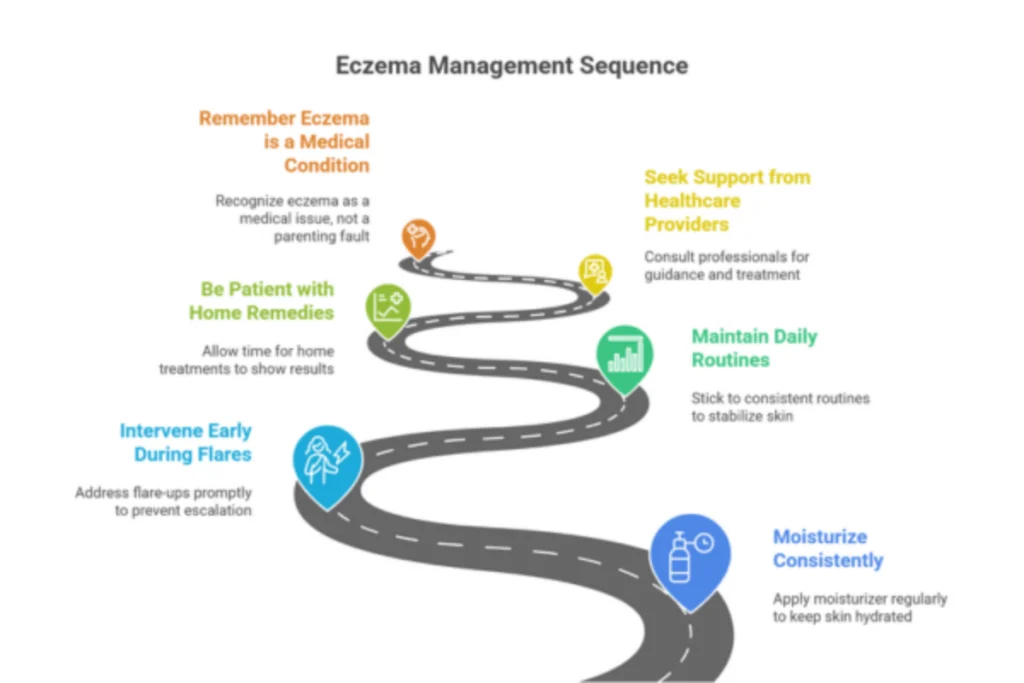
• Moisturize consistently
• Intervene early during flares
• Maintain daily routines
• Be patient with home remedies
• Seek support from healthcare providers
• Remember: Eczema is a medical condition, not a parenting failure
When home remedies are used along with the doctor’s treatment, it becomes even easier for parents to control the child’s eczema. This results in symptoms being managed better and the skin remaining healthy.
“For a quick visual guide, you can also watch this helpful eczema video here.”
What are the best long-term home remedies for managing eczema flare-ups in children?
Parents often ask how flare-ups can be reduced without depending too much on medicines. The answer is simple: moisturizing daily, giving lukewarm baths, keeping the skin gently clean, and staying away from common triggers like heat, dust mites, and harsh soaps. By incorporating these things into a regular routine, the symptoms of eczema gradually become quite better.
How can I soothe my child’s severe nighttime itching caused by eczema?
Itching often increases at night, which causes the child trouble sleeping. To control this, using a cool compress is helpful, and wet-wrap therapy also calms the skin considerably. Scratching can be reduced by diverting the child’s attention to an activity or a story. Applying moisturizer within 3 minutes after bathing is very necessary, because this keeps the skin hydrated and night itching noticeably reduces.
Are natural oils like coconut oil and sunflower oil safe and effective for infant eczema?
Virgin coconut oil and sunflower seed oil are gentle options for infants. They help restore the skin barrier and reduce itching when applied on slightly damp skin. A quick patch test is always a good step before daily use.
Can food allergies trigger eczema symptoms in young children, and how do parents identify them?
Food-related triggers are found in almost one-third of children with moderate or severe eczema. The most common foods that can create problems are milk, eggs, peanuts, soy, and wheat. However, removing these foods from the child’s diet on your own is wrong because this can lead to nutritional deficiencies. Therefore, elimination should always be done only under the supervision of a doctor or specialist.
When should parents seek medical help if home remedies are not improving their child’s eczema?
If the child’s skin becomes very red, water or fluid starts coming out of it, signs of infection start appearing, or the child gets a fever, the doctor should be contacted immediately. Even if the steroid cream’s effect reduces or the itching increases so much that the child is completely uncomfortable, taking the doctor’s help is still necessary.

- Nipah Virus: A Complete Guide to Symptoms, Treatment, and Prevention (2025 Update) - March 18, 2026
- Nipah Virus Mortality Rate and Survival Chances: A Comprehensive 2025 Guide - February 9, 2026
- Warning Signs Your Body Uses to Show Health Issues - February 2, 2026