

When rose flowers dry up and fall, small red or orange fruits form in their place. These are called rose hips. Himalayan Wild Rose Hips (mostly from the Rosa macrophylla plant) found in the Himalayas are larger in size, brighter in color, and have a higher nutritional value. Himalayan wild rose hips grow naturally in the hills of Himachal and Uttarakhand. The flowers are pinkish-white and have many small thorns on the branches.
Table of Contents
This guide explains clearly how to identify them, their health benefits, their uses in Ayurveda and local medicine, how to safely harvest and clean them, and how to make simple recipes.
What Are Himalayan Wild Rose Hips
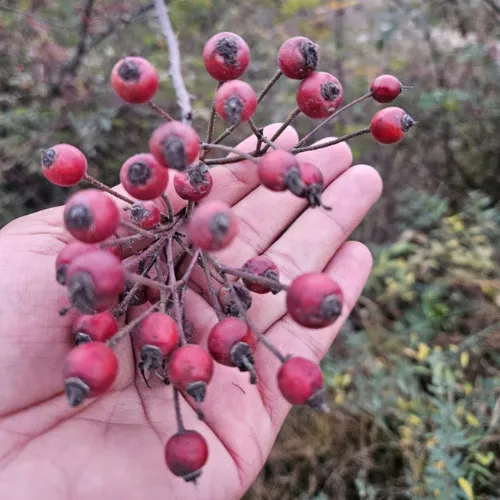
Himalayan Wild Rose Hips are the flowers that form after pollen lands on a rose flower. They belong to the Rosa plant group, which is part of the Rosaceae family.
The special species in the Himalayas is Rosa macrophylla, which grows at high altitudes (2400–3600 meters) and produces large, nutrient-rich rose hips. Other edible and medicinal species include:
• Rosa canina
• Rosa rugosa
• Rosa multiflora
How to Identify Himalayan Wild Rose Hips
Plant Features
• It grows on thorny shrubs. The thorns are sharp and slightly curved.
• The leaves are pinnate, meaning 3–9 small, toothed leaflets are borne on a single stem.
• Pink or white flowers appear in summer.

Fruit Features
• The size is approximately 2–3 cm. Those of Rosa macrophylla are slightly larger.
• Color: Bright red, orange, or deep red.
• The outer surface is smooth and fleshy.
• Inside are many hard seeds covered with fine, stinging hairs.
Quick tip:
Ripe hips detach easily from the stem.
Nutrition Profile: A Vitamin C Powerhouse
Himalayan Wild Rose Hips are one of the most powerful natural sources of Vitamin C. This means that among all the fruits found in nature, they contain the highest amount of Vitamin C.
A normal orange (100g): About 50–60 mg of vitamin C.
Himalayan wild rose hips (100g fresh):
About 300–1500 mg of vitamin C
Rose hips contain 6x to 25x more vitamin C than oranges.
Main Nutrients (Per 100 g)
Nutrients in Rose Hips (in simple words):
• Vitamin C: 426 mg
Meaning many times more than an orange. Some studies suggest even higher values.
• Vitamin A: 217 mcg
Helpful for eyes, immunity, and skin.
• Vitamin E: 5.8 mg
Repairs skin, is an antioxidant.
• Vitamin K: 25.9 mcg
Important for blood clotting and bones.
• Fiber: 24 g
Strengthens digestion, reduces constipation.
• Minerals: manganese, magnesium, calcium, potassium, iron
All of these are useful for the body’s muscles, bones, blood, and energy.
• Phytonutrients: polyphenols, flavonoids, carotenoids, phenolic acids
These are natural antioxidants that protect the body from damage.

Overall simple summary:
These nutrients together strengthen immunity, promote healthy skin, support digestion, and increase overall body strength.
Top Health Benefits of Himalayan Wild Rose Hips
Boosts immunity
It is very high in Vitamin C, which strengthens the body’s immunity. People drink rose-hip tea in winter for this reason.
Strong antioxidant protection
The polyphenols, flavonoids, and carotenoids it contains protect the body’s cells from damage and support heart, brain, and overall health.
Relief in arthritis and joint pain
Studies have proven that rose-hip powder reduces pain, stiffness, and swelling in osteoarthritis and rheumatoid arthritis.
Supports heart health
Regular use can lower bad cholesterol, stabilize blood pressure, and reduce heart-related risk factors.
Skin healing and anti-aging
Rose-hip oil helps in collagen production, making the skin look tight and smooth. Fine lines, dark spots, and pigmentation gradually reduce. Skin moisture also improves.
Improves digestion
It has astringent properties which help with diarrhea. The fiber content is quite high, which relieves constipation and makes digestion smooth.
Weight management
Some research suggests that rose-hip extract can help reduce visceral fat (fat stored inside the abdomen).
Extra benefits
• Effects that protect the brain
• Liver support
• Antimicrobial (germ-preventing) action
• Helps in UTI recovery
• Some relief in heavy periods and cramps
“Click here to know more about Health Benefits of Rose Hips”
Ayurvedic Perspective
Ayurveda refers to rose as Shatpatri and considers it medicinal.

Key Ayurvedic Properties
• Taste: slightly bitter, slightly astringent, and a little sweet too.
• Effect (potency): gives the body a cooling, calming effect.
• Post-digestive effect: gives a sweet-type result, meaning it soothes the stomach.
• Which doshas it balances: Calms both Vata and Pitta.
Traditional Uses
• Reduces body heat and inflammation.
• Supports heart health.
• Cleanses the blood.
• Helps with gastritis, constipation, and ulcers.
• Improves skin color, glow, and hydration.
• It is also used in Ayurvedic remedies for cleaning the eyes and healing injuries.
How to Harvest Himalayan Wild Rose Hips
It is essential to harvest Himalayan Wild Rose Hips correctly, so that the taste is good and the medicinal value is preserved. The best time is from late September to December. When the first frost falls, the fruit becomes even sweeter. Just keep one thing in mind: don’t wait too late, because birds eat them up first.
Wear gloves while harvesting, as the bushes are quite thorny. Never pick fruits from roadside, polluted, or pesticide-sprayed areas. Always choose clean, chemical-free plants. And leave some to share with nature, so the plant can grow again next season.
• Cleaning and removing seeds: The small hairs inside rose hips can irritate the skin and throat. If you want to use the pulp, then wash and dry the fruits thoroughly. Cut both ends. Cut through the middle and remove the seeds and hairs. Wash again so that no hairs remain.
• For jelly or syrup: Boil the whole fruits until they are soft, then strain through a fine sieve or jelly bag.
• Important: Wash your hands thoroughly afterward; otherwise, irritation may occur.
Drying and Storage
• Spread the cleaned rose hips on a tray.
• Let them air dry for 3–5 days.
• If you need to dry them faster, you can use a dehydrator.
• Set the temperature to 38°C and run for about 24 hours.
• When the fruits are thoroughly dry, lightly crush them.
• Then store them in an airtight container to prevent moisture loss and ensure long-term preservation.
Easy and Delicious Uses

• Rose Hip Tea
Soak 2 teaspoons of dried rose hips in hot water for 15–20 minutes.
It’s the perfect drink for winter immunity.
• Rose Hip Jam
Cook rose hips with orange juice and lemon.
Add honey after it cools slightly. The taste is quite rich.
• Rose Hip Syrup
Boil rose hips in water, let it reduce slightly,
then strain and add honey.
It’s also effective for coughs and colds.
• Oxymel
Soak rose hips in honey and vinegar for 2 weeks.
It becomes a healthy tonic.
• Tincture
Steep dried rose hips in alcohol and a little honey for a few weeks.
This is for medicinal purposes.
And yes, you can easily add rose hip powder to smoothies, soups, or sauces.
Safety, Side Effects and Precautions
Rose hips are generally safe but may cause the following problems in some people:
• Stomach upset or nausea
• Loose bowel movements
• Constipation
• Burning sensation in the stomach
• Allergies (occasionally)
And one thing to note:
It is very high in vitamin C, so those at risk for kidney stones should use it with caution.
Avoid or use cautiously if you have:
• Hemochromatosis
In this condition, the body absorbs more iron.
Vitamin C increases iron absorption, so rose hips may be risky for these people.
• Thalassemia
A genetic blood problem that can cause iron overload.
High vitamin C can increase iron levels, so be careful.
• Sickle Cell Disease
Blood cells become misshapen and oxygen flow in the body is affected.
High-dose vitamin C can sometimes lead to complications.
• Bleeding Disorders
People with blood clotting problems may have issues with vitamin K and certain plant compounds.
That’s why rose hips are not always safe for them.
Medicine Interactions
• Warfarin
This is a blood thinner. Rose hips contain vitamin K, which can disrupt the action of warfarin. This can lead to a dose imbalance.
• Aspirin
Aspirin irritates the stomach. Rose hips also sometimes increase acidity, so together they can worsen stomach upset.
• Fluphenazine
Rose hips may slightly affect the metabolism of this medication, which could alter the strength of the medication.
• NSAIDs (such as ibuprofen, diclofenac, etc.)
NSAIDs also irritate the stomach. Taking them with the high acids in rose hips can worsen stomach problems.
Simple meaning:
If someone is on these medicines, it is better to confirm with a doctor before using rose hips.
Suggested Dosage
• Powder: 2.5–5 g twice daily
• Tea: 2 g per cup
Consult a healthcare provider if pregnant or on medication.
Rose Hip Oil for Skin Care
Rosehip oil is considered very powerful for the skin. It deeply moisturizes the skin and quickly removes dryness. It also helps in anti-aging, gradually reducing the appearance of fine lines and wrinkles. Regular use improves skin glow and makes the complexion appear brighter.
It is also helpful in lightening scars and stretch marks. It also provides some protection against sun damage. It also provides a soothing effect on skin problems like eczema and psoriasis.
You can apply it directly to your face, or mix it with a carrier oil (jojoba, argan, etc.) if you want a light application.
“Click here to Buy Best Rose Hip Oil”
Conclusion
Himalayan Wild Rose Hips are a strong natural source of Vitamin C. They contain antioxidants, healthy fatty acids, and many bioactive nutrients. They support immunity, relax joints, repair skin, improve digestion, and also boost heart health. Collecting and cleaning them is also simple. You can use rose hips in products like tea, jam, syrup, tincture, or skincare oil. Adding a little rose hips to your daily routine is a natural way to improve health. Simultaneously, you connect with an old, trusted plant from the Himalayan herbal tradition.
“Click here to learn about Himalayan Wild Rose Hips in Hindi”
Can I consume Himalayan Wild Rose Hips daily?
Yes, rose hips are completely safe to consume in normal quantities.
But if you want to take supplements or high-dose extracts, it’s best to consult a doctor.
Does rose hip oil suit oily skin?
Yes, it’s non-comedogenic, meaning it doesn’t clog pores.
So even those with oily and acne-prone skin can use it.
Does it help in weight loss?
Some studies show that rose hip extract may help reduce belly fat slightly.
It’s not a magic effect, but regular use and combined with a proper diet may provide some improvement.
Is it safe during pregnancy?
Normal amounts consumed are completely safe, but supplements should be avoided unless specifically directed by a doctor. Even then, you should consult your doctor.
Does drying reduce vitamin C?
There is some nutrient loss, but the antioxidants remain quite potent.
This means the benefits are not diminished; they remain viable.

- Nipah Virus: A Complete Guide to Symptoms, Treatment, and Prevention (2025 Update) - March 18, 2026
- Nipah Virus Mortality Rate and Survival Chances: A Comprehensive 2025 Guide - February 9, 2026
- Warning Signs Your Body Uses to Show Health Issues - February 2, 2026