
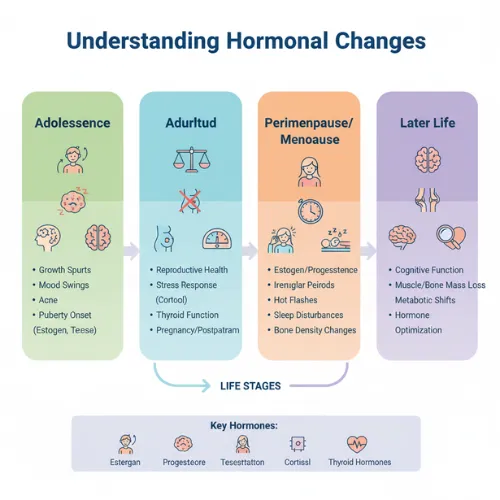
Understanding Hormonal Changes and Natural Balance Steps is a deep dive into how hormones shape your body, mind, and metabolism at every stage of life. Hormonal changes are a natural part of our body that we all have to face, and this is a process that continues throughout our entire life. However, people often do not know about the impact it causes, and no one tells us either. I spoke to some people about what hormonal changes are and what their impacts are; mostly, people had no idea about hormonal changes. When talking about the impact, two answers were very common: first, the onset of periods in females, and second, anger.
People think these are the only impacts of hormonal changes. In reality, hormones are actually chemical messengers that control almost every function of the body. For example, growth and development during puberty, periods and the reproductive cycle, the body’s metabolism, mood and emotions, and even the aging process are under the control of hormones.
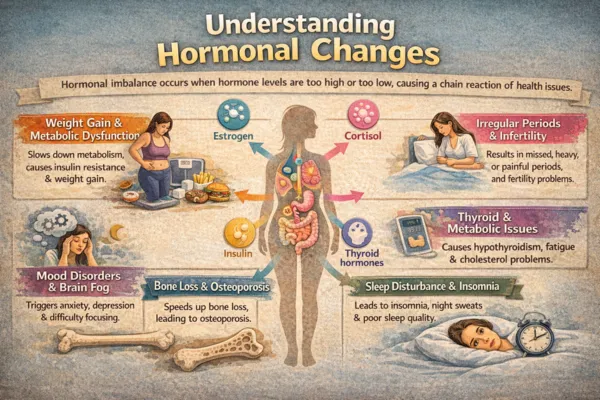
Do you know what can happen if hormonal balance gets disrupted? Let me give you an idea: after hormonal balance is disturbed, problems can start one after another in the body. This includes issues like irregular periods, weight gain without reason, mood swings, anxiety or depression, decreased fertility, and premature aging, and it also affects your pregnancy.
Therefore, it is very important to understand when and why hormonal changes occur, what the warning signs of imbalance are, and which scientifically proven methods exist to keep hormones in balance. This guide explains in a simple way the important hormonal changes occurring at every stage of life, their effects on health, and practical and safe methods to bring hormones back into balance.
When Do Hormonal Changes Occur? The Major Life Transitions
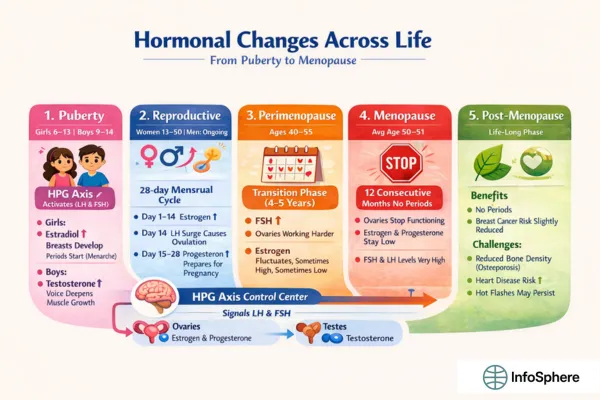
Puberty (Ages 6-13 in Girls, 9-14 in Boys)
In life, we all have to go through many hormonal changes, and this begins very early. Puberty is the first major change in life that occurs because of hormones. It usually starts gradually from the age of 6–8 years. During this time, the body’s hormones become active again and the body begins to grow.
In girls, the estradiol hormone increases during this period. Because of this, breasts develop and periods start, which is called menarche. Often, periods start around the age of 12–13 years. After this, the body becomes capable of pregnancy.
In boys, the testosterone hormone increases. Due to this, the voice becomes heavy, muscles start becoming strong, hair starts appearing on the face and body, and the body begins to show adult-like changes. It would not be wrong to say that hormones play a very important role in turning a child into an adult.
Hormonal Players: Inside the body, there is a control system called the hypothalamic-pituitary-gonadal (HPG) axis. This system signals the hormones, telling them when and how much hormone to produce. When this system becomes active, the body releases hormones called LH and FSH.
In females, these hormones signal the ovaries to produce estrogen and progesterone. These hormones are important for periods, pregnancy, and overall female health. In males, these same hormones signal the testes to produce testosterone, which helps with muscles, beard growth, voice changes, and sexual development. To put it simply, the HPG axis is the body’s boss system that decides which hormone will be released when in both girls and boys.
Reproductive Years (Ages 13-50 in Women; Ongoing in Men)
Let’s understand the reproductive years in simple language. After periods begin, the hormone pattern in women remains fairly stable for many years. A woman’s menstrual cycle is usually about 28 days long and is driven by the balance of hormones. You might have noticed in some females that this cycle keeps fluctuating; the main reason for this is also hormonal imbalance.
Let’s understand this 28-day cycle and what happens in our body during this time. Between Day 1–14, estrogen gradually increases. In this phase, the body prepares for ovulation. Around the middle, approximately day 14, the LH hormone suddenly spikes, which causes ovulation. From Day 15–28, progesterone becomes more active. This hormone readies the body for pregnancy. If pregnancy does not occur, both estrogen and progesterone levels drop, and this is why periods start. Then, this cycle begins all over again.
This hormonal cycle usually stays quite normal for 30–40 years. Yes, some minor changes can occur due to stress, diet, exercise, sleep, and lifestyle. If we talk about men, the testosterone hormone remains quite stable during adult life, but after the age of 30, it starts to decrease gradually.
Perimenopause (Ages 40-55 in Women)
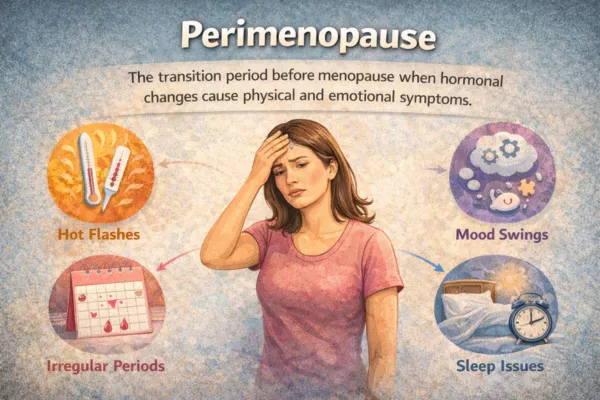
Perimenopause is a transition phase that comes in the life of all women, in some slightly earlier and in some a little later; it comes between a woman’s reproductive years and menopause. This phase usually lasts for 4–5 years and mostly starts in the mid or late 40s.
During this time, the ovaries gradually begin to weaken and the hormone pattern does not remain regular. The cycle that was previously the same every month now becomes unpredictable. You can understand this in simple language like what happens when your car runs out of gas, it doesn’t stop all at once, but first gives a few jerks; it’s just something like that. The pattern of periods in women can change completely. Sometimes periods may come late, sometimes early, and sometimes they are skipped for one or two months. Bleeding can be very heavy or very light.
Estrogen sometimes suddenly increases significantly and sometimes becomes very low. The level of the FSH hormone increases because the body starts signaling the ovaries to work harder. Progesterone is also not produced in proper amounts, which is why normal periods cannot be maintained. pmc.ncbi.nlm.nih+1
Menopause (Average Age 50-51)
We can consider Menopause to have occurred when periods do not happen at all for 12 consecutive months. At this stage, the ovaries almost completely stop functioning, which is why estrogen and progesterone hormones permanently settle at a low level.
The brain part of the body (pituitary gland) still keeps trying to send signals to the ovaries. Because of this, the levels of FSH and LH hormones increase significantly, but the ovaries do not respond because their work has finished.
What happens after Menopause? After Menopause, women enter the post-menopause phase. In this phase, estrogen remains low in the body, and this condition lasts for the rest of one’s life, which can typically be 30–40 years or even longer.
This phase also has some benefits:
• Periods stop permanently.
• The risk of breast cancer decreases slightly.
• There is no tension regarding pregnancy, so contraception is not required.
However, there are also some challenges:
• The body’s metabolism continues to change gradually.
• The risk of heart problems can increase.
• Bones begin to weaken (bone loss).
• In some women, hot flashes persist for a long time.
Andropause (Male Menopause)—Ages 40+ in Men
Andropause is a very long process that lasts until about 50–60 years of age, and in some cases even longer. This does not happen suddenly like menopause in women. In women, hormones drop abruptly during menopause, but in men, testosterone decreases gradually. This process often starts as early as the 20s–30s. On average:
• Total testosterone decreases by about 1% every year.
• The testosterone that actually works for the body (bioavailable testosterone) decreases by about 2% every year.
This is why men do not feel any major change initially, because this decline is slow and continuous. Its effect becomes more visible with age. By the age of 80, the testosterone levels of about 40–50% of men fall below the normal healthy range.pmc.ncbi.nlm.nih
As testosterone gradually decreases, changes slowly begin to appear in the body. These changes do not happen suddenly; rather, they come over time. Its common effects can be:
• Muscle mass and strength begin to decrease.
• Sex drive (libido) and sexual performance may decrease.
• Bones begin to weaken.
• Mood changes start to occur, such as feeling low or irritability.
• Weight gain, especially an increase in fat around the stomach.
Adrenopause (Ages 30+)
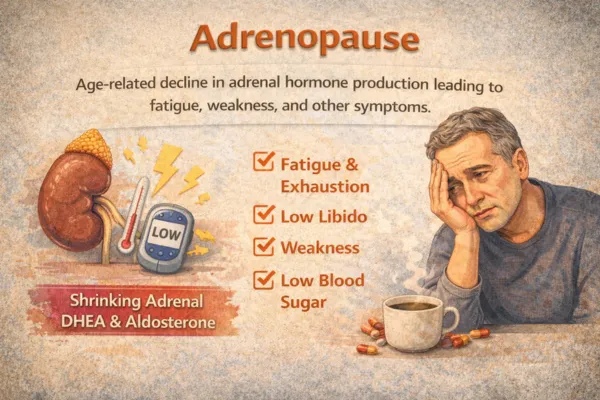
Along with reproductive hormones, our body also contains hormones called DHEA and DHEA-S, which play an important role in the body’s energy, strength, and repair processes. These hormones are at their peak in the 3rd decade of life. After this, whether in men or women, their levels gradually decrease every year, by approximately 2–3% per year.
Due to this gradual decline, the body’s capacity to build and maintain muscle begins to decrease and metabolism slows down. In simple words, the decrease in strength, stamina, and energy felt with increasing age has the reduction of DHEA and DHEA-S hormones as an important underlying reason. pmc.ncbi.nlm.nih
Health Issues Caused by Understanding Hormonal Changes
When hormone levels become too high or too low-meaning they do not remain stable-it is called hormonal imbalance. At such times, the body’s hormones are unable to work in proper coordination. Its effect disturbs several body systems at once, and a chain reaction of health problems begins.
Weight Gain and Metabolic Dysfunction
Hormones are much more useful than we think and perform very significant tasks, such as controlling the body’s metabolism and body shape. In women, when estrogen becomes high and progesterone is low, the body begins to store more fat, especially in the stomach and hip areas. When progesterone is low and cortisol (the stress hormone) is high, hunger increases and cravings for sweet, oily, and high-calorie foods begin. This makes weight control even more difficult.
Did you know that Insulin is also a hormone? Yes, insulin is a crucial peptide hormone. Insulin imbalance is also a major reason for weight gain. For example, in PCOS, there is often insulin resistance, in which cells are unable to use glucose properly. Because of this, the pancreas has to produce more insulin, and this extra insulin signals the body to store fat. Even a 5–10% weight gain significantly worsens insulin sensitivity and makes it difficult for the body to handle sugar. In simple words, hormonal imbalance slows down metabolism and significantly increases the risk of weight gain.
Irregular Menstruation and Reproductive Issues
When hormones are imbalanced, the menstrual system gets disturbed. Sometimes periods do not come at all (amenorrhea), sometimes there is very heavy or prolonged bleeding (menorrhagia), and sometimes there is extreme pain during periods (dysmenorrhea). All these problems are signs that ovulation is not happening properly or that the hormone progesterone, which should be produced after ovulation, is not being made in the proper amount. Progesterone is very essential for keeping periods regular and healthy.
Women who have hormonal imbalances, especially those with PCOS, may face decreased fertility. Additionally, the risk of miscarriage increases, and there are higher chances of complications during pregnancy. To be honest, today, if 10 people try for a baby, only about 5–6 are successful. You might see around you that many people do not have children, and there are long lines at IVF hospitals, and 5 out of every 10 females have PCOS. The main reason for this is the imbalance of hormones.
Mood Disorders and Cognitive Changes
Estrogen and progesterone hormones act directly on brain chemicals, such as serotonin, dopamine, and GABA, which control mood, emotions, and feelings of calmness. When these hormones are balanced, the mood also remains more stable.
During perimenopause, estrogen sometimes becomes high and sometimes very low, and after menopause, estrogen remains permanently low. Because of this, the risk of depression increases by 1.5 to 3 times. Women in perimenopause become more sensitive to mood changes during hormonal ups and downs, especially when estrogen is low.
When progesterone is low, the normal function of the brain gets disturbed. This leads to symptoms such as anxiety, restlessness, a heavy feeling in the head, or a lack of focus (brain fog). In simple words, hormonal imbalance directly affects mood, mental health, and thinking ability. Estrogen and progesterone directly influence neurotransmitter systems including serotonin, dopamine, and GABA—the brain’s mood-regulating chemicals. As estrogen fluctuates during perimenopause or remains low post-menopause, depression risk increases 1.5-3 fold. Perimenopausal women demonstrate increased vulnerability to mood disruption during hormonal fluctuations, particularly during times of low estrogen. Progesterone deficiency impairs central nervous system function, contributing to anxiety and cognitive fog.
Thyroid and Metabolic Disease
Thyroid hormones and reproductive hormones are deeply interconnected. A clear example of this is PCOS. While hypothyroidism occurs in only 1–2% of the general population, it is seen in as many as 11–14% of women with PCOS.
The reason for this is that the insulin resistance found in PCOS disrupts the metabolism of thyroid hormones. Additionally, when estrogen is low, the production of thyroid hormone also decreases. This means one problem worsens the other. This is why I used the phrase “chain of problems” above.
When both PCOS and hypothyroidism occur together, the effect on the body is quite serious. In such women, triglycerides are higher, fasting insulin is high, and insulin resistance is significantly greater compared to having PCOS alone. In simple words, the combo of thyroid issues and PCOS makes the metabolism extremely slow and disturbed.
Bone Loss and Osteoporosis
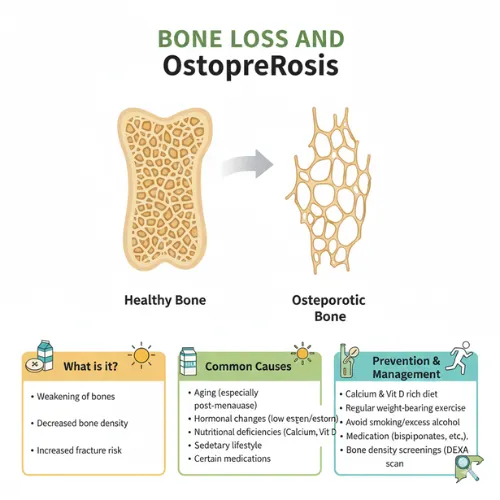
After menopause, when estrogen drops significantly, bone loss in women becomes very rapid. Bone density can drop by about 2-3% annually during the first 5-8 years of menopause. For this reason, postmenopausal women are more likely to develop osteoporosis, particularly those who have experienced long-term estrogen deficiency. Put simply, bones start to deteriorate as soon as estrogen levels drop.
Sleep Disturbance and Insomnia
Did you know that hormonal imbalance also disturbs your sleep? The hormone progesterone helps in improving sleep because it supports the brain’s GABA system, which calms the body and mind. When progesterone begins to decrease during perimenopause and menopause, problems like insomnia or frequently waking up start to occur.
If stress is high, the cortisol hormone increases. This hormone disrupts the sleep–wake cycle and also interferes with the functioning of melatonin (the sleep hormone). This creates a vicious cycle: sleep is ruined, cortisol increases further, and sleep becomes even more disturbed. Studies show that insomnia develops for the first time in approximately 28% of perimenopausal women, and in many women, pre-existing sleep problems worsen significantly during this phase.
Skin Problems and Accelerated Aging
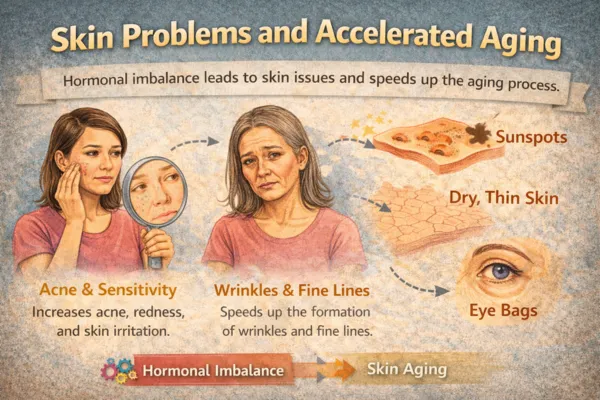
When hormones gradually begin to decrease, the body starts producing less collagen. Because of this, skin hydration decreases and the skin’s natural oil (sebum) balance also gets disrupted. When androgens (male hormones) become high, the skin produces more oil. This causes acne and also increases inflammation in the skin.
After menopause, when estrogen becomes very low, wrinkles start forming rapidly, the skin becomes thin, dryness occurs, and skin elasticity—meaning its stretch and tightness—decreases. In simple words, as soon as hormones decrease, signs of aging start appearing quickly on the skin. medicalnewstoday+1
Low Libido and Sexual Dysfunction
Everyone loves their sex life, but did you know it’s all a game of hormones? Testosterone isn’t just a male hormone; it is also produced in small amounts in women’s bodies by the adrenal glands and ovaries. This hormone is important for sexual desire (libido) in both men and women.
As age increases and hormonal changes occur, when testosterone decreases, sexual interest gradually begins to decline. Along with this, if the balance of estrogen and progesterone is disrupted, sexual satisfaction can also decrease, and problems with vaginal lubrication can occur. To put it plainly, hormonal imbalance directly affects sex drive, comfort, and overall sexual wellbeing. medlineplus+1
Cardiovascular and Metabolic Disease
To be honest, before researching for this blog, even I didn’t know this fact: Estrogen works protectively for the heart. It increases HDL (good cholesterol), decreases LDL (bad cholesterol), keeps blood vessels healthy, and helps in controlling blood pressure. Because of this, before menopause, women have a relatively lower risk of heart disease. After menopause, when estrogen levels drop, this natural protection comes to an end. As age increases, the risk of heart disease in women becomes equal to that of men, and in some cases, even higher.
The interesting thing is that if estrogen becomes too high (estrogen dominance), that isn’t safe either. In such a condition, chronic inflammation increases in the body, which can also increase the risk of cardiovascular disease and breast cancer. In simple words, it is neither good for estrogen to be too high, nor too low. Balance is what’s most important. rush+2
How to Maintain Hormonal Balance: Evidence-Based Strategies
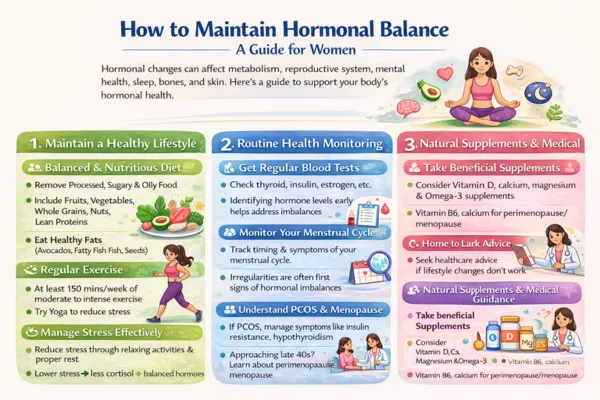
1. Optimize Nutrition—Prioritize Whole Foods and Strategic Macronutrients
Evidence: Nutrition plays a massive role in keeping hormones balanced. What we eat directly affects hormone production and metabolism. A 2024 study on the Mediterranean diet showed that people who ate more whole grains, fatty fish, legumes, and colorful vegetables, and consumed less processed food, had better insulin sensitivity, lower inflammation, and a healthier hormonal profile compared to those on a refined-carb Western diet.
Specific Strategies:
To achieve this, some simple and practical strategies can be followed:
Focus on Whole Foods: Overall, your diet should give more space to cruciferous vegetables (like broccoli, cabbage, and Brussels sprouts), leafy greens, berries, fatty fish, legumes, whole grains, nuts, and seeds.
Protein is Key: It is essential to take 25–30 grams of protein in every meal because protein helps in making hormones and reduces ghrelin (the hunger hormone). This keeps your stomach full for longer. Options like eggs, chicken, fish, legumes, tofu, and nuts can be included for protein.
Healthy Fats are Raw Material: Omega-3 rich foods like fatty fish, flaxseeds, and walnuts, along with healthy fats like avocado, olive oil, and nuts, act as the raw material for hormones. Omega-3 fats also prevent cortisol from rising too much during stress.
Fiber for Stability: Your diet should contain enough fiber, approximately 25–35 grams per day. Fiber from whole grains, legumes, vegetables, and fruits improves insulin sensitivity, reduces inflammation, and signals the brain that the stomach is full.
Avoid Spikes: One should stay away from refined carbs, excessive sugar, and processed foods, as these cause sudden spikes in blood sugar and insulin, which disrupts hormonal balance.
2. Regular Exercise—Combine Cardio, Strength Training, and Flexibility Work
Evidence: Physical activity is incredibly powerful for your hormones. A major 2024 meta-analysis, which included 116 randomized trials, shows that regular exercise isn’t just about losing weight; it helps hormones function better even if your weight stays exactly the same.
Exercise improves insulin sensitivity, meaning your body can use sugar much more efficiently. It also lowers cortisol (the stress hormone) levels. Another important takeaway is that exercise makes your hormone receptors more sensitive. This means the hormones your body is already producing can do their jobs much more effectively. healthline+1
Exercise Components:
Exercise is a powerful tool for keeping your hormones in balance—you just need the right mix.
HIIT (High-Intensity Interval Training) involves short bursts of full effort followed by a bit of rest. It gives you the metabolic benefits of a long workout in much less time.
Aerobic exercise, such as brisk walking, cycling, or swimming for 150 minutes a week, lowers insulin levels and makes your body more responsive to it. This is a huge help for managing both blood sugar and weight.
Strength training should be done 2–3 times a week to engage your major muscle groups. This helps preserve and build muscle mass; remember, the more muscle you have, the faster your metabolism and the better your insulin sensitivity.
Yoga and stretching do more than just improve flexibility; they are great for lowering cortisol (the stress hormone) and improving the overall hormonal flow in your body.
3. Optimize Sleep Quality—Aim for 7-9 Hours of Consistent Sleep
Evidence: Poor sleep is incredibly disruptive to your hormones. Research shows that when you don’t get enough sleep, cortisol (the stress hormone) can increase by about 28%. At the same time, leptin—the hormone that signals you’re full—drops by 18%, while ghrelin—the hormone that triggers hunger—spikes by 28%.
The direct result of this is that when you lack sleep, you feel hungrier, your stress levels rise, and your body starts storing more fat. On top of that, insulin sensitivity can drop by as much as 30%, making blood sugar control and weight management much more difficult.
Studies even suggest that if women sleep just 2 hours less than they should, their fat loss during a weight loss journey can decrease by up to 55% compared to women who get adequate rest. In simple terms, without good sleep, it becomes nearly impossible to keep your hormones and your weight under control. pmc.ncbi.nlm.nih+1
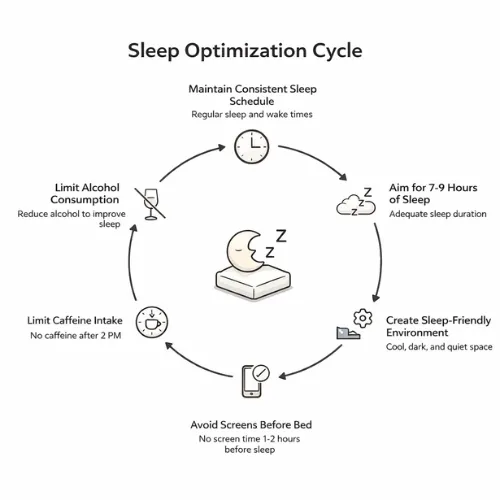
Sleep Optimization Strategies:
• Maintain consistent sleep and wake times
• Aim for sleep 7-9 hours daily
• Create a sleep friendly environment like cool, dark and quiet.
• Avoid screens 1-2 hours before bed
• Try to avoid Avoid caffeine after 2 PM
• Try to Limit alcohol it disrupts sleep quality
4. Manage Stress Effectively—Implement Cortisol-Lowering Practices
Evidence: Chronic stress, meaning stress that sticks around for a long time. It is a major disruptor. When you are constantly stressed, your cortisol levels stay elevated. This high cortisol interferes with the body’s reproductive hormone system (the HPG axis), ramps up your appetite, and signals your body to store fat specifically in the belly area.
Because of high cortisol, your sleep also suffers, which further worsens any existing hormonal imbalance. Studies show a direct link between high stress and weight gain, irregular periods, reduced fertility, and more severe perimenopause symptoms. apollo247+1
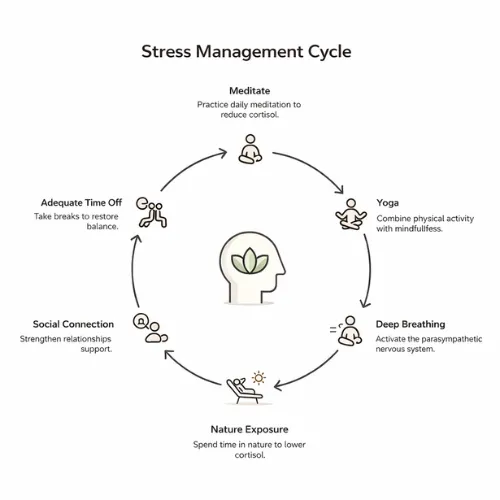
Stress Management Techniques:
• Meditation: Meditate10-20 minutes daily to reduces cortisol and increases parasympathetic tone.
• Yoga: It is a great technique to Combines physical activity with breath work and mindfulness to lower cortisol.
• Deep Breathing: Try deep breathing it helps to activates the parasympathetic nervous system.
• Nature Exposure: Even 20 minutes in nature reduces cortisol levels. fertilityfamily
• Social Connection: Strong relationships and social support lower stress hormones. Try to spend atleast 2hrs weekly with your frinds.
• Adequate Time Off: Try to take regular breaks from work and screen time restore nervous system balance.
5. Maintain a Healthy Weight
Evidence: Excess weight, especially belly fat, produces inflammatory substances in the body that disrupt hormonal signaling. Because of this, hormones are unable to do their jobs effectively. Obesity has a very strong connection to insulin resistance. Furthermore, body fat actually begins to produce extra estrogen, which leads to hormonal dominance and significantly increases the risk of PCOS.
The good news is that if an overweight person loses just 5–10% of their body weight, the body’s insulin sensitivity begins to improve and ovulation in women starts to become more regular. In simple terms, even a small amount of weight loss can bring about a massive positive change for your hormones. frontiersin+2
6. Support Gut Health
Evidence: The gut microbiome inside our body—meaning the “good” bacteria in your stomach—plays a vital role in producing and processing hormones. It is especially involved in estrogen metabolism through a collection of bacteria known as the “estrobolome.”
When your gut microbiome is healthy, hormone production is more efficient, inflammation stays low, and nutrient absorption is at its peak. All of these factors are essential for your body to manufacture the hormones it needs. In simple terms, if your gut bacteria are healthy, your hormones will stay much more balanced. aatreyaayurved+2
7. Targeted Supplementation and Herbs
Evidence-Based Supplements:
Inositol: For PCOS, inositol (particularly myo-inositol) improves insulin sensitivity and ovulatory function.frontiersin+1
Vitamin D: Low vitamin D correlates with PCOS, irregular periods, and poor bone health; aim for 2000-4000 IU daily.healthline+1
Omega-3 Fatty Acids: Anti-inflammatory; improve insulin sensitivity.fertilityfamily+1
Magnesium: Reduces stress hormones and improves sleep quality.healthline+1
8. Ayurvedic Approaches to Hormonal Balance
“I feel that ‘Ayurvedic Approaches to Hormonal Balance’ is a very broad and important topic, and it deserves a detailed discussion. That’s why I am writing a separate, complete blog on this topic, and I will share the blog link later.”
“best ayurvedic approaches for hormonal balance”
Can women still get pregnant after menopause?
No. Women cannot get pregnant naturally after menopause. When menopause occurs, the ovaries stop releasing eggs and periods stop permanently. Since natural ovulation does not happen at this stage, pregnancy is not possible.
However, there is one important thing to remember:
Pregnancy can still occur during perimenopause, because ovulation can still happen occasionally during that phase, even if periods are irregular.
In simple terms:
Perimenopause = pregnancy is possible
After Menopause = pregnancy is not possible (naturally)
What happens after Menopause?
After Menopause, women enter the post-menopause phase. In this phase, estrogen remains low in the body, and this condition lasts for the rest of one’s life, which can typically be 30–40 years or even longer.
This phase also has some benefits:
• Periods stop permanently.
• The risk of breast cancer decreases slightly.
• There is no tension regarding pregnancy, so contraception is not required.
However, there are also some challenges:
• The body’s metabolism continues to change gradually.
• The risk of heart problems can increase.
• Bones begin to weaken (bone loss).
• In some women, hot flashes persist for a long time.
Does masturbation have any effect on andropause?
No, masturbation does not cause, worsen, or prevent andropause.
Andropause is caused by the age-related, gradual decline of testosterone. This decline is linked to genetics, age, health, sleep, stress, weight, and lifestyle-not sexual activity.
What symptoms are seen in Perimenopause phase?
The pattern of periods in women can change completely. Sometimes periods may come late, sometimes early, and sometimes they are skipped for one or two months. Bleeding can be very heavy or very light.

- Nipah Virus: A Complete Guide to Symptoms, Treatment, and Prevention (2025 Update) - March 18, 2026
- Nipah Virus Mortality Rate and Survival Chances: A Comprehensive 2025 Guide - February 9, 2026
- Warning Signs Your Body Uses to Show Health Issues - February 2, 2026