
The Definitive Diarrhea Management Guide 2025 here we talk about a very common disease Diarrhea. Diarrhea is a very common problem that affects people all over the world. I’m sure you must have suffered from it as a child, and who knows, you might still be suffering from it.
There are approximately 1.7 billion cases every year, which is not a small number. In developing countries (like India, Nepal, and many African countries), it is still a major health problem for young children, as dehydration can even lead to death. However, significant improvements have been seen compared to the past, and it has now become one of the most fatal diseases for young children.
Table of Contents
Diarrhea means frequent, loose, watery stools, accompanied by abdominal pain, cramps, and dehydration. Most cases resolve within 2–3 days without any special treatment. However, medication, such as ORS, is necessary for children. But if diarrhea persists for more than 4 days, it is not normal. It can be a sign of some serious conditions:
→ Crohn’s disease
→ Celiac disease
Or some parasitic infections that cause chronic diarrhea.
If diarrhea becomes very severe, the body loses a lot of fluids. This is called severe dehydration, which is why it is recommended to drink a lot of water during diarrhea. What can happen with severe dehydration:
→ Body organs can be damaged
→ Shock can occur
→ Fain can occur
→ Rarely it can lead to coma and in worst cases, death can occur
That’s why diarrhea remains a major cause of death worldwide, especially in young children (under 5 years).
According to one study, diarrhea affects approximately 1.7 billion children worldwide every year, and unfortunately, more than 440,000 children die every year. who+1
Causes and Risk Factors
Diarrhea can occur for many reasons. The most common causes are bacteria, such as E. coli, Salmonella, Shigella, and Vibrio cholerae, which are mostly introduced into the body through dirty water, stale food, or dirty hands. Viruses, such as rotavirus and norovirus, are also a major cause of diarrhea, especially in young children. Food poisoning, food intolerance (such as lactose intolerance), and food allergies can also trigger this problem. Some parasites, such as giardia, infect the stomach through contaminated water and raw vegetables.
Sometimes, medications, especially antibiotics, can cause diarrhea as a side effect. Chronic conditions such as inflammatory bowel disease (Crohn’s, ulcerative colitis) and irritable bowel syndrome can also cause frequent loose motions. Lastly, poor sanitation and hygiene, such as dirty water, not washing hands while cooking, and not having clean surroundings, further increase the risk of infection.
Symptoms and Warning Signs
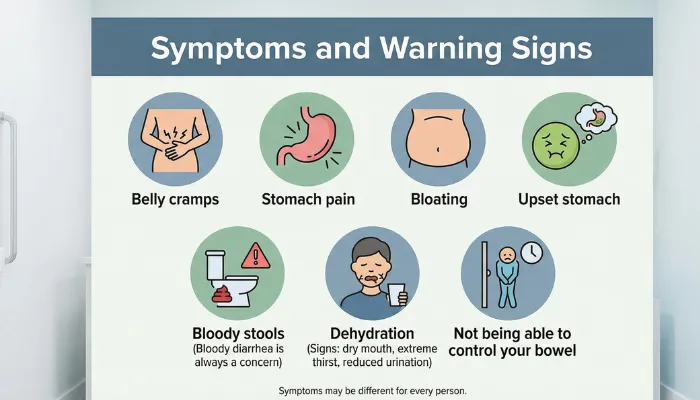
Symptoms may be different for every person, such as
• Belly cramps
• Stomach pain
• Bloating
• Upset stomach
• Bloody stools (Bloody diarrhea is always a concern)
• Dehydration (Signs include dry mouth, extreme thirst, and reduced urination)
• Not being able to control your bowel
The Definitive Diarrhea Management Guide 2025: Diagnosis
Diarrhea is a very common problem, known to almost everyone. Diagnosing it isn’t difficult. A doctor can determine whether a patient has diarrhea with a simple physical examination. If you still have any doubts, there are tests available to confirm the condition.
• Stool studies
• Sigmoidoscopy
• Colonoscopy
• Imaging tests
• Blood tests
“Click here to know more about these medical tests”
Treatment Options
Treatment depends on your diagnosis. The severity of your symptoms and your overall health also play a role in deciding treatment. Diarrhea usually resolves on its own within 2–3 days. If it persists, treatment may be necessary.
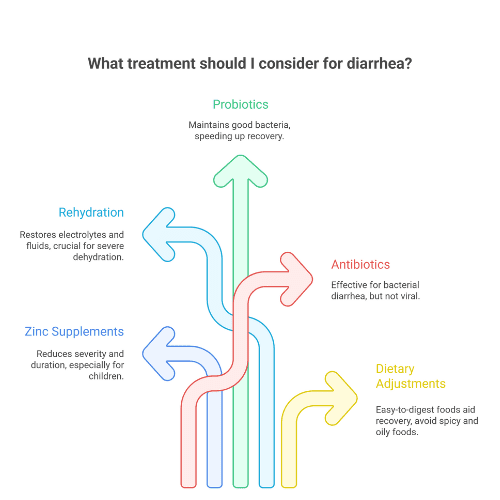
Zinc Supplements
Zinc is essential when dealing with diarrhea, especially for children. It reduces the severity of diarrhea and shortens its duration.
Rehydration
ORS solution restores lost electrolytes and fluids, and IV fluids are required in severe dehydration cases.
Probiotics
Probiotics are foods or supplements that contain live microorganisms such as curd, buttermilk, pickle, Yakult drink etc. These maintain or improve the body’s “good” bacteria and speed up recovery.
Antibiotics
In most cases, bacterial diarrhea does not require treatment; it resolves on its own within 3-4 days. Do not self-medicate, as antibiotics or antiparasitic drugs are effective only when the diarrhea is caused by a specific bacteria or parasite. If the diarrhea is caused by a virus, antibiotics will not work at all, as antibiotics only affect bacteria, not viruses. In cases of acute watery diarrhea, a doctor may prescribe medications such as levofloxacin or ciprofloxacin, if needed.
Dietary Adjustments
During diarrhea, eat foods that your body can easily digest, such as bananas, rice, and toast. Spicy, oily, or high-fiber foods can slow down recovery, so avoid them. A special advice: Don’t eat anything spicy. In many cases, spicy foods can cause pain or irritation in the rectum while passing stools.
You should call your doctor immediately if:
→ Diarrhea is recurring
→ The amount of stool is excessive
→ There are signs of dehydration, such as excessive thirst, fatigue, dizziness, decreased urination, or a dry mouth.
→ There is blood in the stool, the stool is black or tarry, there is a fever, or there is vomiting.
Prevention Tips
It is very important to vaccinate children against rotavirus and cholera (if common in the area). This significantly reduces the risk of diarrhea in the future. Hygiene is essential. There should be a clean toilet at home. Dispose of stool in a place where it does not come into contact with drinking water. Always cook food thoroughly; do not eat half-cooked or old leftover food. Washing hands with soap is a simple habit but the most effective. Wash hands before eating and after using the toilet.
Always drink boiled or purified water. Where safe drinking water is not available, use bottled water.
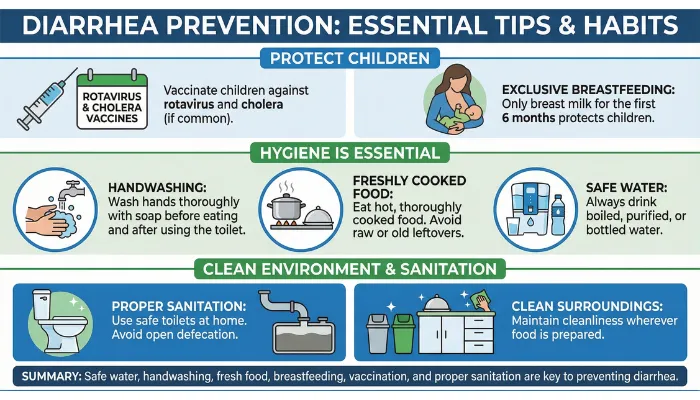
The best ways to prevent diarrhea, according to the latest research:
→ Safe water: Use boiled, bottled, or properly treated water.
→ Handwashing: Wash hands thoroughly with soap after using the toilet and before eating.
→ Freshly cooked food: Eat hot, freshly cooked food; avoid raw or undercooked food.
→ Exclusive breastfeeding: Giving only breast milk for the first 6 months protects children.
→ Vaccination: Ensure children receive the rotavirus vaccine.
→ Clean environment: Maintain cleanliness wherever food is prepared.
→ Proper sanitation: Use safe toilets and avoid open defecation.
Following these habits greatly reduces the risk of diarrhea.
The Global Impact of Diarrheal Diseases
Diarrhea is most prevalent in low- and middle-income countries, where access to clean drinking water and healthcare facilities is limited. The World Health Organization (WHO) estimates that approximately 58% of diarrhea deaths worldwide could be prevented if water, sanitation, and hygiene (WASH) were improved.
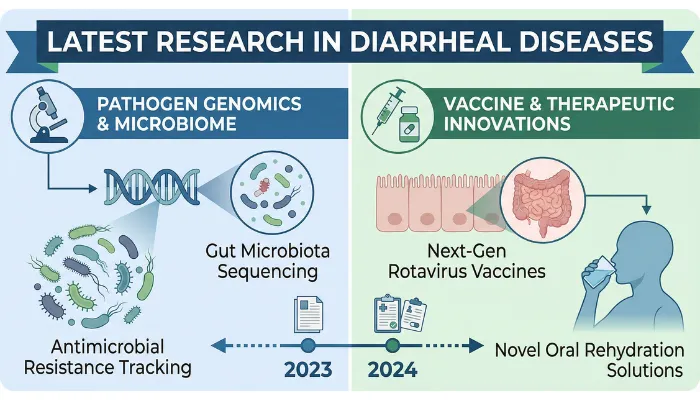
Latest Research in Diarrheal Diseases
1. Global Burden of Disease
Diarrheal disease remains a critical global health challenge.
- High Mortality Rate: Diarrhea remains a major cause of death among children worldwide. Each year, approximately 1.7 billion cases occur among children, and more than 44.3 million children die.
- (Ref: who+1)
2. Core Treatment: ORS and Zinc
A combination of copper and zinc is considered the best and standard treatment for diarrhea. Together, they prevent dehydration and speed recovery.
- ORS Effectiveness: ORS is a very simple and very effective treatment. The latest low-osmolarity ORS formulas work much better than older ORS. They also have a very low failure rate, approximately less than 5%.
- (Ref: msdmanuals+1)
- Historical Impact: It is credited with saving more than 70 million lives worldwide since its introduction. It is such an effective treatment.
- (Ref: pmc.ncbi.nlm.nih)
- Zinc Benefits: Giving zinc along with ORS saves more lives. Zinc reduces the duration of diarrhea by about a day and also reduces the risk of future diarrhea.
- (Ref: who+2)
- Global Recommendation:The World Health Organization recommends that every child with diarrhea be given zinc. It speeds up recovery and also helps prevent future episodes.
- (Ref: pmc.ncbi.nlm.nih+3)
3. Emerging Therapies & The Microbiome
New research focuses on gut health and specific probiotic strains.
- Probiotics: Probiotics appear to be helpful in reducing both the severity and duration of diarrhea. New research suggests that certain specific strains are most effective, such as Bacillus clausii, Saccharomyces boulardii, and multi-strain probiotic blends. These strains rapidly restore good gut bacteria, so recovery is faster.
- Updated Guidelines: According to the 2025 guidelines, probiotics are recommended at moderate levels for children with viral diarrhea. While they do help, they are not as strong a must-have treatment as ORS + Zinc.
- (Ref: pmc.ncbi.nlm.nih+3)
- Gut Health: The importance of the gut microbiome is becoming increasingly understood these days. When diarrhea occurs, the healthy bacteria in the gut become disturbed. This weakens immunity and can increase the risk of future infections.
- (Ref: pmc.ncbi.nlm.nih+1)
4. Prevention: Vaccines and Hygiene (WASH)
Preventative measures have led to significant drops in mortality.
- Vaccine Impact: Rotavirus vaccines have significantly reduced hospitalizations and deaths due to severe diarrhea. Vaccines like Rotavac and Rotasiil are specifically designed for low-resource areas and hot climates, making them very effective in countries like India.
- (Ref: pmc.ncbi.nlm.nih+2)
- Reduced Mortality: Rotavirus vaccine campaigns have seen a significant reduction in child deaths from diarrhea worldwide. These vaccines have significantly reduced child mortality.
- (Ref: elifesciences+2)
- WASH Protocols: Water, sanitation and hygiene (WASH) programs, along with vaccines and medical treatment, are the most effective way to prevent diarrhea. Washing hands with soap and using clean drinking water are proven methods that significantly reduce the risk of diarrhea.
5. Challenges & Public Health Initiatives
Antibiotic Resistance: Antibiotic resistance is becoming a major problem. Some bacteria, such as Shigella and Campylobacter, are less responsive to antibiotics, limiting treatment options. This is why guidelines recommend that antibiotics be used only in severe cases, not for every diarrhea patient.
National Campaigns: National and global campaigns, such as India’s STOP Diarrhea campaign, distribute ORS and zinc to people and educate families. These programs have saved many lives.
What diseases are associated with diarrhea?
Diarrhea isn’t just caused by infection; certain medical conditions can also cause it, such as:
Celiac disease – in which the body cannot tolerate gluten
Inflammatory bowel diseases – such as Crohn’s disease or ulcerative colitis
Irritable bowel syndrome (IBS) – in which the stomach is frequently upset
Lactose intolerance – in which the stomach becomes upset after eating milk or dairy products
Malabsorption syndromes – in which the body cannot properly absorb nutrients from food
In these conditions, diarrhea can recur and last long-term.
What are symptoms of diarrhea?
Symptoms may be different for every person, such as:
• Belly cramps
• Stomach pain
• Bloating
• Upset stomach
• Bloody stools (Bloody diarrhea is always a concern)
• Dehydration (Signs include dry mouth, extreme thirst, and reduced urination)
Not being able to control your bowels
What virus is diarrhea?
Rotavirus, adenovirus, and astrovirus.
Are bananas good for diarrhea?
Eat foods that are high in pectin, such as applesauce, bananas, and yogurt. Pectin, a water-soluble fiber, helps reduce diarrhea.

- Nipah Virus: A Complete Guide to Symptoms, Treatment, and Prevention (2025 Update) - March 18, 2026
- Nipah Virus Mortality Rate and Survival Chances: A Comprehensive 2025 Guide - February 9, 2026
- Warning Signs Your Body Uses to Show Health Issues - February 2, 2026