
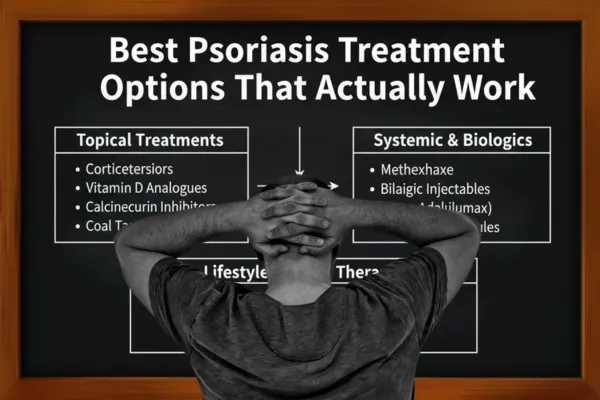
The best psoriasis treatment options that actually work in 2025 include allopathic treatment, biologic treatments, Ayurvedic approaches, and some emerging treatments. Psoriasis is the most persistent chronic skin disease, affecting 125 million people worldwide. The question of whether a cure exists is still debated. Unfortunately, current medical science has no permanent cure for psoriasis, but modern treatments have revolutionized its management. Modern treatments are able to achieve complete or near-complete remission of symptoms. I think it’s a life-changing improvement.
Table of Contents
A 2024 study found 96% of severe psoriasis patients achieved PASI90 with biologics, effectively feeling “cured” despite continued treatment with PMC.
“Click here to know about how to treat psoriasis naturally.“
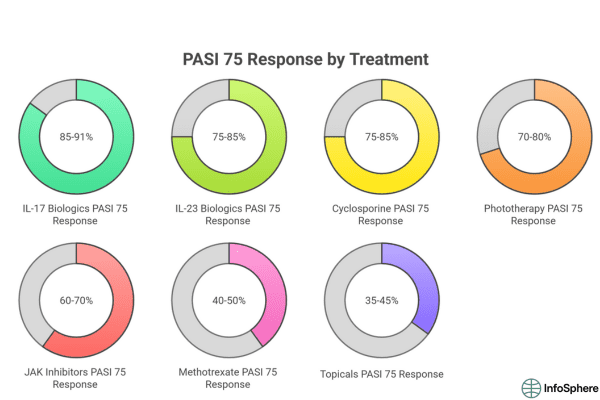
Treatment Effectiveness at a Glance
Patient satisfaction is highest with biologics, phototherapy, or biologic + methotrexate treatment and lowest with topicals.
Allopathic Treatment Options
Allopathic medicine offers a good option for treating psoriasis. Treatment depends on the severity of the disease, the amount of body surface area affected, and patient factors. If we talk about the last 20 years, allopathic treatments have advanced a lot. It’s good news because not everyone can afford other treatment options.
Topical Treatments
Topical therapies are still considered the first-line treatment for psoriasis until the disease has spread to less than 10% of your body. If the disease has spread more, creams are used as an additional supplement. Steroid creams like clobetasol are considered the most effective and strong treatment. They reduce redness, itching, and extra skin cell growth. If applied twice a day, improvement is seen within 2-3 weeks.
Vitamin D analogs Treatments
Steroids have more side effects; to avoid this, vitamin D creams like calcipotriene are suggested. Their effectiveness is as much as steroid creams. It has been seen that if steroid cream and vitamin D cream are used together, then the result is stronger. If we look for options, then there are also options of salicylic acid, coal tar, anthralin, and tacrolimus creams, but which cream should be used in which conditions? You will come to know only after meeting the doctor. pmc.ncbi.nlm.nih+1
Phototherapy
Narrowband UV-B phototherapy is very effective in severe cases of psoriasis. This therapy uses a special type of UV light that shines on the skin. This slows the growth of dysfunctional skin cells and causes some cells to naturally die off. Skin inflammation is also reduced. Therefore, this treatment is considered safer and better than older UV light therapy. ijdvl+1
Systemic Therapies
Methotrexate is also considered very helpful and has been used for a long time for severe psoriasis, psoriatic arthritis, and nail psoriasis. Most patients notice a difference within 4–6 weeks. Some people’s psoriasis may be almost completely cured by 6 months, but results vary from person to person.
Oral Treatments: JAK Inhibitors and Icotrokinra
Oral treatment offers convenience, fast improvement, and lower cost than biologic treatment.
- Tofacitinib & Upadacitinib: Effective for PASI75
- Deucravacitinib: Superior efficacy among oral drugs
- Icotrokinra (2025): 50% of patients achieved completely clear skin. (JNJ).
Traditional Treatments
Methotrexate: PASI50 in 52.5%, mild side effects, weekly dosing
Cyclosporine: 86% clearance in 12 weeks, skin allergy
Phototherapy: PASI75 in 73.7%, home devices effective Psoriasis.org
Biologic Treatments: A Paradigm Shift
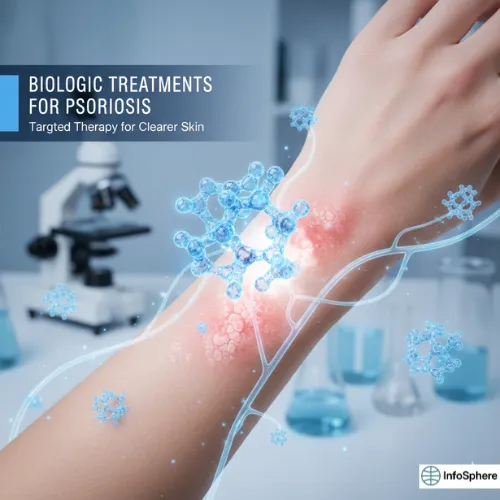
The biologic medications that have emerged in the last 10–15 years have completely changed the game of psoriasis treatment. These medications specifically target and block the inflammatory signals that trigger psoriasis. This way, the entire immune system is not suppressed, but only the affected area. This results in more effective treatment and fewer side effects compared to older, stronger medications. pmc.ncbi.nlm.nih+3
Modern biologic medicines target specific chemicals in the body to control psoriasis. These chemicals are called cytokines. Three cytokines are primarily targeted: TNF-alpha, IL-17, and IL-23.
- IL-17 inhibitors (such as secukinumab)
These block the cytokine called IL-17.
This significantly reduces the inflammation and scaling of psoriasis.
By week 16, approximately 77% of people experience a 75% improvement, and 24% achieve completely clear skin. - IL-23 inhibitors (e.g., guselkumab, risankizumab, tildrakizumab)
These are considered the strongest and most effective biologics.
Guselkumab results in 75% improvement by week 16 in 91% of patients and almost 100% clear skin in 37%. - TNF-alpha inhibitors (etanercept, infliximab, adalimumab)
These are older biologics, but they are still very effective.
They reduce psoriasis symptoms and improve quality of life.
In clinical trials, the effectiveness of biologic medications is usually measured by a PASI 75. A PASI 75 means that the severity of psoriasis has decreased by 75%. Modern IL-23 inhibitors are so effective that 90% or more of patients see a 90% improvement within a year. This means that the skin becomes almost clear. For those with moderate or severe psoriasis, these medications are literally life-changing. Because inflammation and red patches that appear all over the body are completely cured or significantly reduced. nature
Biological Therapies: Most Effective Treatments
- IL-17 Inhibitors: Bimekizumab – 91% PASI90 clearance Dermatology
- IL-23 Inhibitors: Risankizumab – 71.6% PASI90 JAMA
Emerging Treatments
Newly approved medications are also showing promise. Tapinarof (aryl hydrocarbon receptor agonist), roflumilast (PDE-4 inhibitor), and ducravacitinib (TYK2 inhibitor). All three have been shown to be safe and effective for mild to severe cases of psoriasis. The advantage of these medications is that if a patient does not respond well to biologics or experiences side effects, they provide additional treatment options. sciencedirect
Gene Therapy: RNAi, CARD14 protein degradation, IL-4 plasmids PMC
CAR-T Therapy: 92.59% improvement, sustained remission 3+ years
Personalized Medicine: Genetic profiling, combination therapies, immune system rebalancing
Ayurvedic Approaches: Traditional Perspectives on Psoriasis
Complementary to allopathic medicine, Ayurveda offers traditional approaches to psoriasis management, viewing the condition as an imbalance in Pitta and Kapha doshas resulting from poor digestion, stress, or dietary factors. Ayurvedic treatments focus on detoxification and restoration of skin health through herbal remedies.
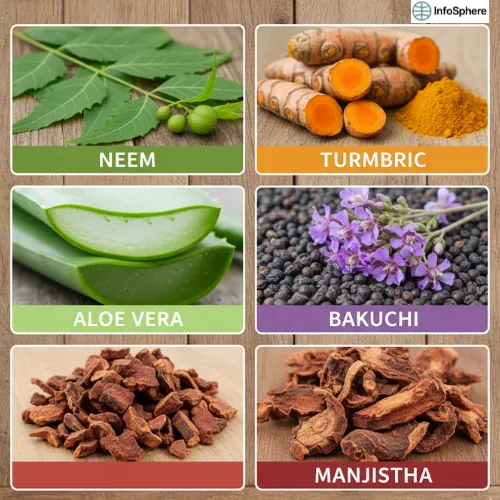
Neem (Azadirachta indica) is a key herb in Ayurveda. It has antibacterial, antifungal, and anti-inflammatory properties.
In a clinical study, 50 psoriasis patients were given oral neem capsules (neem leaf extract) along with topical tar 5% + salicylic acid 3%.
The result was that those who received neem had a significantly lower PASI score than the placebo group. This means that neem significantly improved symptoms.
Other important Ayurvedic herbs:
- Turmeric: Contains curcumin, which is a strong anti-inflammatory.
- Aloe vera: Soothes the skin and provides moisture.
- Bakuchi: Improves skin tone, reduces discoloration.
- Manjistha: Considered a blood purifier in Ayurveda, it supports skin healing.
Panchakarma therapies aim to remove toxins from the body through a structured detox process.
Best Psoriasis Treatment Options That Actually Work: Bottom Line
A permanent cure for psoriasis has not yet been found, but modern treatments offer near-cure results. Biologics and new oral medicines improve skin so much that the quality of life is completely transformed. Some patients have accidentally experienced a complete and permanent cure of psoriasis after receiving CAR-T therapy. This provides proof that complete and long-term remission is possible in the future.
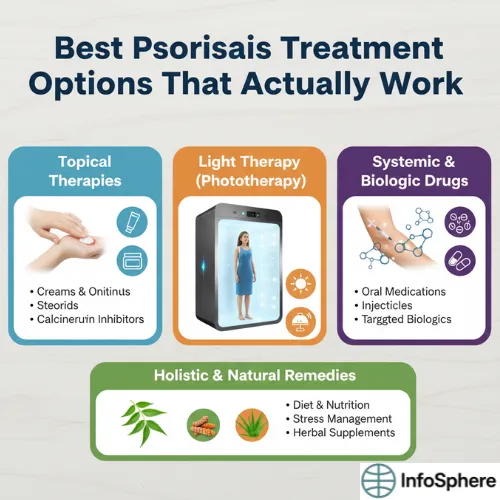
For now, the focus is on early, effective, and personalized treatment, with hope for true cures within the next decade.
Which treatment works fastest for psoriasis?
I think if you need fast results, LI-17 and LI-23 biologics work the fastest. Oral drugs like ducravacitinib also provide quick improvement.
Are biologic treatments safe for psoriasis?
Yes, biologics are targeted therapies. This means they don’t suppress the entire immune system. Side effects are minimal, but close medical monitoring is essential.
Can psoriasis affect the joints?
Yes, some people may develop psoriatic arthritis. Joint pain, stiffness, or swelling may occur. Early treatment is essential.
Which treatment has the highest success rate?
L-23 biologics offer the highest clearance rates, with several studies showing improvements of up to 90 percent.

- Nipah Virus: A Complete Guide to Symptoms, Treatment, and Prevention (2025 Update) - March 18, 2026
- Nipah Virus Mortality Rate and Survival Chances: A Comprehensive 2025 Guide - February 9, 2026
- Warning Signs Your Body Uses to Show Health Issues - February 2, 2026