
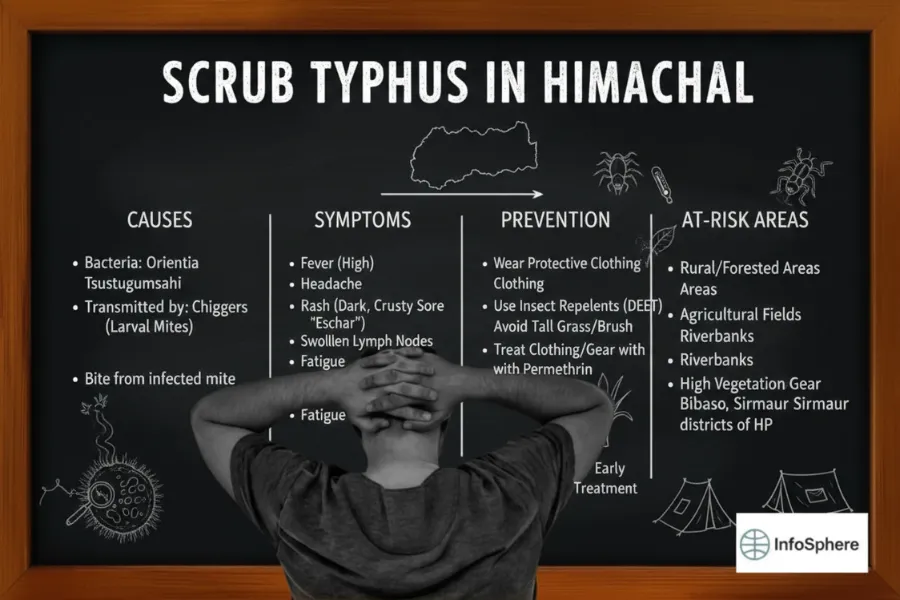
Scrub typhus in Himachal and other parts of India has increased rapidly in recent years. Between 2003 and 2023, more than 47,650 cases were reported across the country, with a mortality rate of around 2.4%. The highest numbers were found in South India (Tamil Nadu, Karnataka, Kerala, Andhra Pradesh) and North India (Himachal Pradesh, Uttarakhand, Uttar Pradesh). Between 2023 and 2025, thousands of cases — including several deaths — have been reported from Odisha, Himachal Pradesh, and Rajasthan. In rural India, nearly 10% of the population may be affected each year. The disease usually peaks during the monsoon and winter seasons. lshtm+3
Table of Contents
What is scrub typhus?
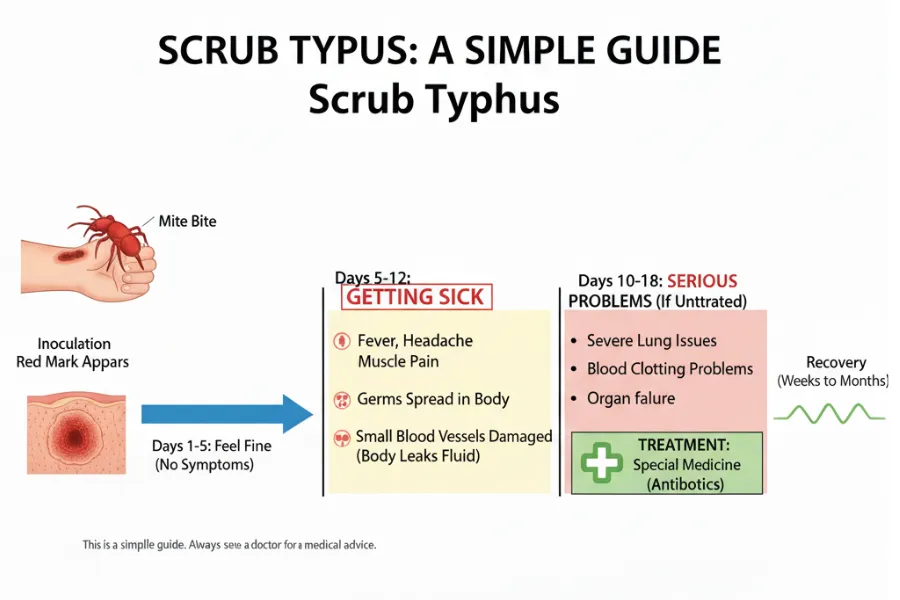
Scrub typhus is a bacterial infection caused by the bite of a tiny mite (chigger). These chiggers live in grasses, bushes, and forest soil. Their bites are minor, but if the infection spreads throughout the body, it can be fatal.
The bacteria is called Orientia tsutsugamushii, which enters the body and damages blood vessels.
Why Scrub Typhus in Himachal prevalent?
In the hilly areas of Himachal, people cut grass, dry fodder, and work in the fields after the monsoon. These infected mites come in contact during this time.
· Moist and dense grass is a perfect breeding ground for them.
· Most cases of scrub typhus are found from July to October.
· Many people are affected every year in the Shimla, Kangra, Mandi, Solan, and Bilaspur districts.
Symptoms of Scrub Typhus
Symptoms appear 6–14 days after the bite:
· Sudden fever and fatigue
· Headache, muscle pain, and joint pain
· Red rash (not everyone gets it)
· A black spot (eschar) at the bite site—this is the most characteristic sign.
If the infection progresses, it can lead to:
· Difficulty breathing (pneumonia)
· Liver and kidney damage
· Headache, confusion, or even coma.
When Does Scrub Typhus Become Life-Threatening?
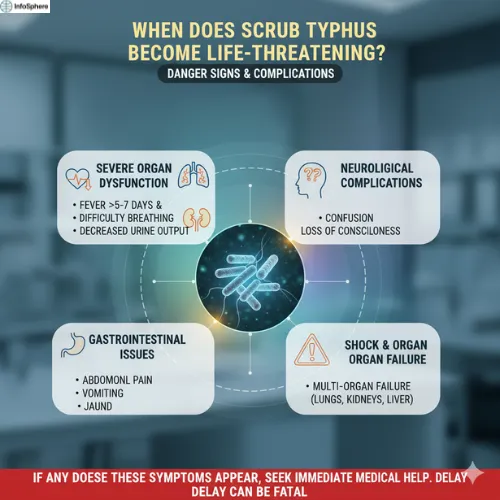
Scrub typhus becomes dangerous when:
· Fever lasts more than 5–7 days and blood pressure begins to drop
· Difficulty breathing or decreased urine output
· Abdominal pain, vomiting, or jaundice
· Confusion or loss of consciousness
All these signs indicate that the infection has reached the liver, kidneys, or brain—delay at this stage is very risky.
Diagnosis of Scrub Typhus
Doctors confirm with blood tests:
· IgM ELISA test (most accurate)
· Weil-Felix test
· PCR test (available in some labs)
Do not ignore scrub typhus, thinking it is a viral fever, typhoid, or dengue.
“Learn everything about this test—click here.
Treatment of Scrub Typhus
Scrub typhus is completely curable if diagnosed early. Doctors prescribe antibiotics such as
· Doxycycline – most effective
· Azithromycin—safe for pregnant women and children
Patients begin to feel better within 2–3 days of starting treatment. Delays can be fatal.
First Aid options in Scrub Typhus
If you are in a mountainous area where a doctor is not immediately available, follow these steps:
· Keep the patient at rest and avoid excessive movement.
· Apply a cold compress to reduce fever.
· Maintain hydration—give ORS, lemon water, soup, or water frequently.
· If a bite wound is visible, clean the area with a mild antiseptic, but do not rub or scratch it.
· Consult a doctor over the phone—do not take antibiotics on your own.
Helpful Home Remedies for Scrub Typhus
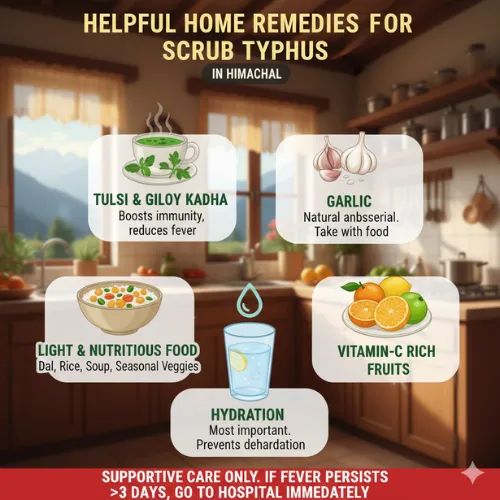
The original treatment for scrub typhus is antibiotics, but these home remedies can help with recovery from scrub typhus in Himachal:
· Tulsi and Giloy kadha – boosts immunity and reduces fever.
· Garlic—a natural antibacterial, but always take it with food.
· Vitamin-C-rich fruits—like lemon, orange, and amla.
· Hydration is most important—dehydration worsens the condition.
· Eat light and nutritious food—dal, rice, soup, and seasonal vegetables.
These remedies are only for supportive care. If the fever does not subside within 3 days, go to the hospital immediately.
Prevention tips for Scrub Typhus
Simple but essential steps to prevent scrub typhus:
· Wear full clothing during grass bites—a full-sleeved shirt, full pants, and socks.
· Apply insect repellent (DEET lotion) to your hands, feet, and clothes.
· Avoid sitting in bushes and reduce dense grass around your home.
· Keep animal grazing areas clean.
If you develop a fever after a bite, don’t ignore it, thinking it’s a viral fever.
The condition of scrub typhus in Himachal

Thousands of cases of Scrub Typhus in Himachal are reported every year.
· Mostly in Shimla, Mandi, Kangra, Solan, and Bilaspur.
· Due to lack of awareness, people mistake it for a viral fever and delay treatment.
Can a Tiny Mite Really Make You This Sick?
Yes, Scrub Typhus is caused by the bite of a tiny mite (chigger). It is caused by the bacteria Orientia tsutsugamushi and can cause fever, headache, body aches, and rash.
How Do You Know If You Have Scrub Typhus?
Symptoms include high fever, headache, body aches, nausea, vomiting, and a skin rash. Sometimes, a black scab (eschar) appears where the mites have bitten. If not treated promptly, the infection can become serious.
Which Tests Can Confirm Scrub Typhus Fast?
Diagnosis is usually based on a physical exam, along with blood tests like ELISA or PCR. Early detection makes treatment fast and effective.
What’s the Best Way to Treat This Sneaky Infection?
Treatment primarily consists of antibiotics such as doxycycline or azithromycin, along with rest, hydration, and fever control. Severe cases may require hospitalization.
How Can You Protect Yourself from Scrub Typhus in Himachal’s Mountains?
Prevention includes protective clothing, insect repellent, and caution in bushy areas. Keeping homes and farm areas clean also reduces the risk of infection. Early detection and hygiene help prevent scrub typhus.
🔍 Final Thoughts on Scrub Typhus in Himachal
Scrub typhus is a hidden but deadly disease. If you or anyone around you spends a lot of time cutting grass or working in the woods or in the fields, be sure to tell them about this disease.
“A little caution, a lifetime of protection.”

- Nipah Virus: A Complete Guide to Symptoms, Treatment, and Prevention (2025 Update) - March 18, 2026
- Nipah Virus Mortality Rate and Survival Chances: A Comprehensive 2025 Guide - February 9, 2026
- Warning Signs Your Body Uses to Show Health Issues - February 2, 2026