
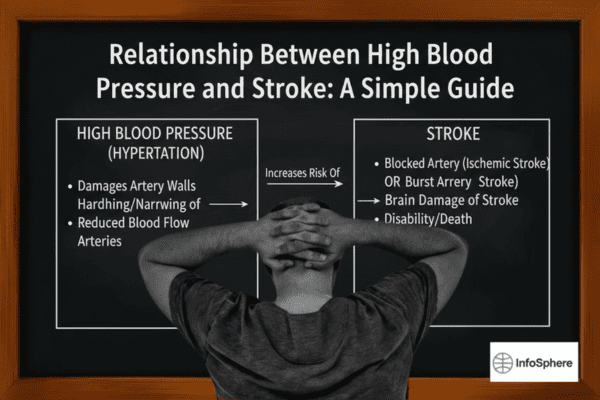
Relationship Between High Blood Pressure and Stroke: High BP silently weakens arteries, raising your risk of stroke and heart disease—know the link. High blood pressure (hypertension) is a very common and serious health problem today. Nearly half of adults in the United States alone have it, according to the American Heart Association, and more than 1.3 billion people worldwide are affected. WHO. What makes it dangerous is its strong link with heart disease and stroke. If you understand how these two (BP and heart/stroke) are linked, then you can significantly reduce your risk by making some changes in your lifestyle and diet.
“Click here to know everything about stroke.”
Table of Contents
What is High Blood Pressure?
High blood pressure means that the pressure in your blood vessels is higher than normal. When this pressure persists for a long time, the heart has to work extra hard to pump blood. This can weaken the heart and damage the arteries.
The most dangerous part of this is that high blood pressure is directly linked to heart disease and stroke. Meaning, if your blood pressure isn’t under control, your risk of having a heart attack or stroke increases significantly.
A normal blood pressure reading is less than 120/80 mmHg, while anything 130/80 mmHg or higher counts as hypertension.
The most dangerous part of high blood pressure is that it often doesn’t show any symptoms. That’s why it’s called a “silent killer.” This means you may think everything is fine, but deep inside, it’s damaging your heart, brain, and blood vessels.
How High Blood Pressure Damages Your Body
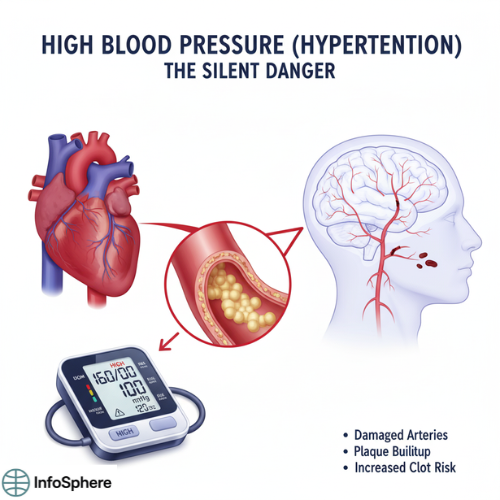
Relationship Between High Blood Pressure and Stroke Let’s understand what happened. When blood pressure stays high for a long time, it causes harmful changes in the body:
- Damage to arteries: When blood pressure is repeatedly or constantly high, extra pressure is placed on the artery walls (which carry blood). These walls thicken and harden, leading to a condition called atherosclerosis. This causes the arteries to narrow, and blood flow to the heart and brain is not smooth. Result? — The risk of heart attack or stroke increases because blood and oxygen cannot reach properly.
- Heart strain: High blood pressure forces the heart to pump blood because the arteries become tight. The harder the heart works, the more it tires. Over time, the heart muscle weakens, and this can lead to heart failure.
- Weakened blood vessels: Persistent high pressure weakens some blood vessels. When the walls become thin and weak, they are at risk of rupture. If this rupture occurs in the brain, bleeding or a hemorrhagic stroke can occur—a life-threatening situation.
The Connection to Heart Disease
High blood pressure is one of the strongest risk factors for heart disease. Here’s how:
- Coronary artery disease: Coronary arteries are the blood vessels that supply oxygen and nutrients to the heart. When someone has high blood pressure, plaque (deposits of cholesterol and fat) begins to build up faster inside the arteries. This process is called atherosclerosis—meaning the arteries become narrow and hard.
When arteries become blocked, blood flow to the heart decreases. This causes angina – pain or tightness in the heart when the heart receives less oxygen. If the blockage becomes complete, it can lead to a heart attack because some parts of the heart are not getting any blood at all. Healthline Mayo Clinic. - Heart failure: When blood pressure remains high for years, the heart has to work extra hard to pump blood. This constant pressure and effort causes the heart muscle to tire and weaken. Mayo Clinic.
- Enlarged heart: When your blood pressure is constantly high, the heart has to pump blood with more force each time. This extra pressure causes the heart muscle, especially the left ventricle (the main pumping chamber), to gradually thicken and enlarge. This process is called Left Ventricular Hypertrophy (LVH). Initially, the heart appears stronger, but in reality, it becomes less flexible and tired.
The result is that:
→ The heart begins to have difficulty pumping blood.
→ The risk of heart failure, irregular heartbeat (arrhythmia), and heart attack increases. PMC Consensus.
Every 20 mmHg rise in systolic blood pressure (the top number) doubles the risk of heart disease PMC Consensus.
The Link to Stroke
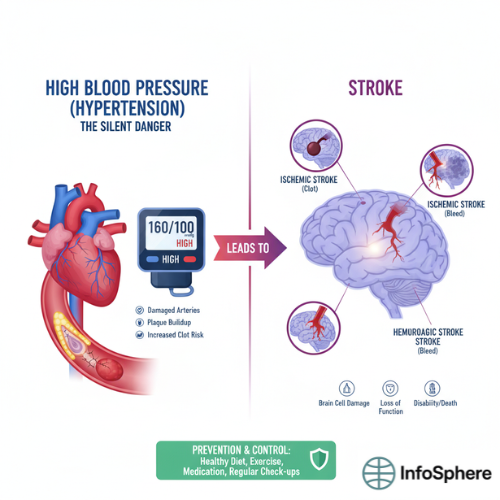
High blood pressure is the leading cause of stroke, responsible for about half of all cases Stroke Association UK. It causes two main types:
- Ischemic stroke (blocked blood flow): When your blood pressure remains high for a long time, the arteries get damaged, and plaque (fat and cholesterol) starts accumulating in them. This plaque blocks the blood vessels going to the brain, due to which blood and oxygen cannot reach some parts of the brain. Result? The cells of that part of the brain start dying, and some parts of the body may experience numbness, difficulty in speaking, or paralysis.
- Hemorrhagic stroke (bleeding in the brain): In this type, the blood vessel expands because its walls are weakened by persistent high pressure. When the vessel ruptures, blood leaks into or around the brain. This bleeding damages brain cells and can cause symptoms such as a sudden, severe headache, vomiting, or unconsciousness.
Lowering blood pressure—even by just 5–10 mmHg—can reduce stroke risk by 30–40% PMC.
How Common Are These Conditions?
- Globally: 1.3 billion adults live with high blood pressure WHO
- In the U.S.: 45.4% of adults are affected CDC
- Only 21% manage to keep it under control Nature WHO
- It contributed to nearly 79,000 deaths in 2015 in the U.S. American Heart Association
By age and gender: The rate of high blood pressure in young adults, i.e., people aged 18 to 39, is 22.4%—meaning slightly more than 1 in 5 people have this problem. But as age increases, the risk also increases significantly. In people over 60, it reaches 74.5%—meaning approximately 3 in 4 people have high blood pressure. Gender-wise, men have a higher chance of having high blood pressure (51%), while women have a slightly lower chance of having high blood pressure, at 39.7%. CDC.
Prevention and Lifestyle Changes
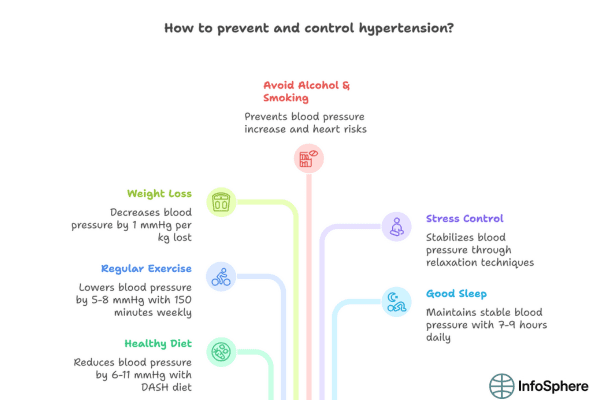
The good news: hypertension can often be prevented and controlled with healthy habits
- Healthy diet: Eat more fruits, vegetables, whole grains, nuts, and lean protein. Reduce salt consumption to no more than 1,500–2,300 mg of sodium daily. (This “DASH diet” can lower blood pressure by 6–11 mmHg.)
- Exercise: Do some walking, yoga, or cycling daily. About 150 minutes of exercise a week lowers blood pressure by 5–8 mmHg.
- Weight loss: Losing even a little weight is beneficial. For every 1 kg (2.2 lbs) you lose, your blood pressure drops by approximately 1 mmHg.
- Avoid alcohol and smoking: Both increase blood pressure and are dangerous for the heart.
- Control stress: Yoga, meditation, or deep breathing calms the mind and keeps blood pressure stable.
- Get good sleep: Less or restless sleep increases blood pressure. It’s best to get 7–9 hours of sleep daily.
When to See a Doctor
High blood pressure often occurs without symptoms, so regular checkups are crucial.
• After age 18, you should have your blood pressure checked every two years.
• After age 40, or if you have diabetes, obesity, or a family history, you should have your blood pressure checked every year.
• If you already have high blood pressure, monitor it more frequently if your doctor recommends it.
If your blood pressure reaches 180/120 or higher and is accompanied by chest pain, severe headache, blurred vision, weakness, or confusion, go to the hospital immediately – this could be a hypertensive crisis, which is an emergency condition.
Treatment Options
If lifestyle changes aren’t enough, medications can help:
- ACE inhibitors: ACE inhibitors are a type of medication that relaxes blood vessels so that blood can flow more easily. They block a hormone that normally narrows blood vessels.
Examples: Lisinopril, Enalapril
Side effects: Occasionally, a dry cough or dizziness may occur. American Heart Association GoodRx Drugs.com. - Other drugs: In addition to ACE inhibitors, doctors may also prescribe ARBs, calcium channel blockers, or diuretics for high blood pressure. These medicines work by relaxing the blood vessels and removing excess water and salt from the body so that blood pressure remains normal. American Heart Association.
How does high blood pressure increase the risk of stroke?
When blood pressure remains persistently high, the walls of the arteries become damaged. These walls thicken and narrow, reducing blood flow to the brain—and this blockage increases the risk of stroke.
What types of strokes are linked to high blood pressure?
High blood pressure can cause both types of stroke:
Ischemic stroke: When arteries become blocked and blood doesn’t reach the brain.
Hemorrhagic stroke: When a weakened blood vessel ruptures and causes bleeding in the brain.
Can controlling blood pressure really prevent a stroke?
Yes, if blood pressure is kept under control, the risk of stroke can be reduced by up to 50%.
A healthy diet, regular exercise, and reducing stress are very helpful in this.
What are the warning signs of a stroke caused by high BP?
Sudden facial drooping, difficulty speaking, weakness of the extremities, or blurred vision—these could all be signals of a stroke.
Go to the hospital immediately if you experience these symptoms.
What should I do if my blood pressure is often high?
You should have regular check-ups with your doctor and take your BP medications on time.
Also, reduce your smoking, increase your exercise, and avoid smoking/alcohol – all of these reduce your risk of stroke.
The Bottom Line
High blood pressure, heart disease, and stroke are deeply connected.
When blood pressure is high, arteries are damaged and extra pressure is put on the heart, increasing the risk of heart attack and stroke.
But the good news is that if you keep your blood pressure under control, the risk of both of these problems is greatly reduced.
Even small improvements can make a big difference.
Remember these points 👇
- Check your blood pressure regularly
- Focus on a healthy diet and exercise
- Take doctor-prescribed medications if necessary
- Pay attention to emergency warning signs (such as chest pain, headache, vision problems)
- Follow your blood pressure control plan in consultation with your doctor
In simple words, controlling blood pressure is the best way to protect both your heart and brain. By taking steps now, you can protect your heart, brain, and overall health.
“Click here to know everything about stroke.”

- Nipah Virus: A Complete Guide to Symptoms, Treatment, and Prevention (2025 Update) - March 18, 2026
- Nipah Virus Mortality Rate and Survival Chances: A Comprehensive 2025 Guide - February 9, 2026
- Warning Signs Your Body Uses to Show Health Issues - February 2, 2026