
Neonatal jaundice management is more than just treating yellow skin—it’s about ensuring newborns get the right care at the right time for a healthy start. If we talk about the diseases that occur in newborn babies, neonatal jaundice is the most common one. {nearly 60% of full-term babies and up to 80% of preterm babies in the first week of life (Healthline)}. In some cases, it can be life-threatening, but in most babies it can be managed well. Understanding neonatal jaundice is very important so that parents can detect it in time and the baby can receive proper treatment. This way, we can reduce the number of deaths caused by it.
Table of Contents
What is Neonatal Jaundice?
Just like in adults, an increase in bilirubin leads to jaundice; the same happens in babies. When the bilirubin level rises, newborns develop neonatal jaundice. The only difference is that in babies the liver is not fully developed, so it cannot process bilirubin properly, which results in neonatal jaundice.
Causes of Jaundice in Newborns
Before we understand the neonatal jaundice management, it’s necessary to understand the cause. An underdeveloped liver is not the only reason for neonatal jaundice. Let’s look at the different causes that can lead to it:
- Physiological jaundice: This is a very common type of neonatal jaundice, in which the baby’s liver is not fully developed.
- Prematurity: Babies who are born prematurely are at a higher risk of developing it because their liver is not yet fully developed. (WHO).
- Breastfeeding-related jaundice: It is very important for the baby to breastfeed and to breastfeed well. If the baby is not feeding properly on mother’s milk, the risk of neonatal jaundice increases significantly.
- Blood type incompatibility (Rh or ABO incompatibility): The mother’s antibodies destroy the baby’s red blood cells (NIH).
- Infections or genetic conditions: Rare but possible causes of neonatal jaundice.
Neonatal Jaundice Management: Symptoms Parents Should Watch For
- Yellowing of the eyes and then skin.
- Poor feeding.
- difficulty waking the baby.
- unusual sleeping pattern.
- In severe cases, stiff or floppy body movements (urgent medical attention needed) (Flint Rehab).
Diagnosis and Testing
Accurate diagnosis and testing are essential parts of neonatal jaundice management to identify the severity and guide timely treatment.
- Visual exam: checking yellowing of eyes and skin.
- Bilirubin test: Blood test.
- Monitoring risk factors: Prematurity, low birth weight, or blood type incompatibility are common monitoring factors (Mayo Clinic).
Neonatal Jaundice Management in Babies
1. Phototherapy (Light Treatment)
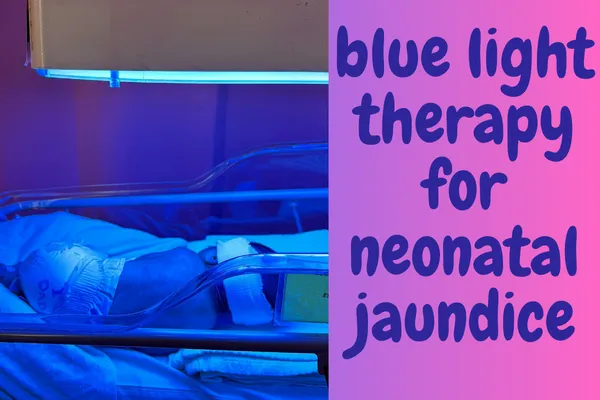
Phototherapy is a common treatment for neonatal jaundice. The baby is placed under blue light, which changes bilirubin into a form the body can remove easily. The baby’s eyes are protected, and bilirubin levels are monitored. It’s safe, effective, and helps prevent complications from high bilirubin.
2. Exchange Transfusion (Severe Cases)
Exchange transfusion is used in severe cases of neonatal jaundice when bilirubin levels are dangerously high and phototherapy isn’t enough. In this procedure, the baby’s blood is gradually replaced with donor blood. This quickly lowers bilirubin levels, prevents brain damage, and is done under strict medical supervision.
3. Intravenous Immunoglobulin (IVIg)
Intravenous Immunoglobulin (IVIg) is used in cases of neonatal jaundice caused by blood group incompatibility, such as Rh or ABO incompatibility. IVIg helps block the antibodies that destroy the baby’s red blood cells, reducing bilirubin production. This treatment lowers the need for exchange transfusion and is given through a vein.
4. Adequate Feeding
Adequate feeding is vital in managing neonatal jaundice. Frequent breastfeeding helps the baby pass stools and urine, which removes bilirubin from the body. Babies should be fed 8–12 times a day in the first weeks. Proper feeding lowers the risk of severe jaundice and supports healthy growth.
Parental Tips: What You Can Do at Home for Neonatal jaundice management
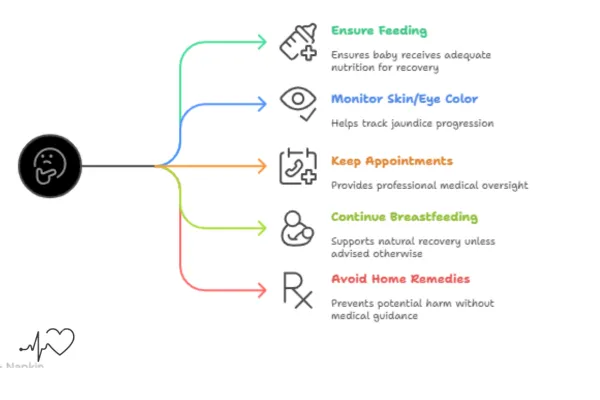
Ensure your baby is feeding well (breast milk or formula).
Watch for changes in skin and eye color daily.
Keep follow-up appointments with your pediatrician.
Never stop breastfeeding unless advised by a doctor.
Don’t try home remedies like sunlight exposure without medical guidance.
Long-Term Outlook
Most babies recover well, but in some rare cases recovery is incomplete or complications arise, and in such cases the risk of kernicterus (kernicterus is rare but serious brain damage in newborns caused by very high untreated bilirubin levels in the blood) increases. That’s why early neonatal jaundice management in babies is critical.
How to treat neonatal jaundice at home?
In some cases it can be improved simply with frequent breastfeeding, ensuring the baby is well hydrated and passes stools regularly. However, always consult a doctor before relying only on home care.
What is phototherapy treatment for neonatal jaundice?
Phototherapy is the most common and widely used treatment, where special blue light is used to break down bilirubin in the baby’s blood, making it easier for the body to eliminate.
What is the difference between physiological and pathological neonatal jaundice?
Physiological jaundice is common, temporary, and usually resolves on its own. Pathological jaundice appears earlier, lasts longer, and may be linked to serious underlying conditions.
What are the risk factors of neonatal jaundice in premature babies?
Babies who are born prematurely are at a higher risk of developing it because their liver is not yet fully developed.
When should parents worry about neonatal jaundice in newborns?
If jaundice appears within the first 24 hours, spreads quickly, or the baby is lethargic and feeding poorly, immediate medical care is needed
“Want to learn about neonatal health? Click here for a complete guide on neonatal diseases, and check out our detailed guide on “Most Common Neonatal Diseases and Disorders”!
What are your thoughts on Neonatal Jaundice Management in Babies? Share your advice and questions in the comments below

- Nipah Virus: A Complete Guide to Symptoms, Treatment, and Prevention (2025 Update) - March 18, 2026
- Nipah Virus Mortality Rate and Survival Chances: A Comprehensive 2025 Guide - February 9, 2026
- Warning Signs Your Body Uses to Show Health Issues - February 2, 2026