

Reverse CAD with diet and exercise means that by making small changes in your eating habits and daily movement (exercise), you can make your heart much healthier. Earlier doctors used to think that Coronary Artery Disease (CAD) was a problem that only gets worse with time, but research has shown that by following the right lifestyle, it can be slowed down, stopped, and in many cases even reversed. The most important role here is played by diet and exercise. ( PubMed, JAMA, PMC.)
Table of Contents
Reversal doesn’t mean your arteries will become brand new. It means the disease stops progressing, plaque buildup stabilizes, blood flow improves, and the risk of heart attack or death is significantly reduced. Harvard Health, Cleveland Clinic.
Is It Really Possible to Reverse CAD with Diet and Exercise?
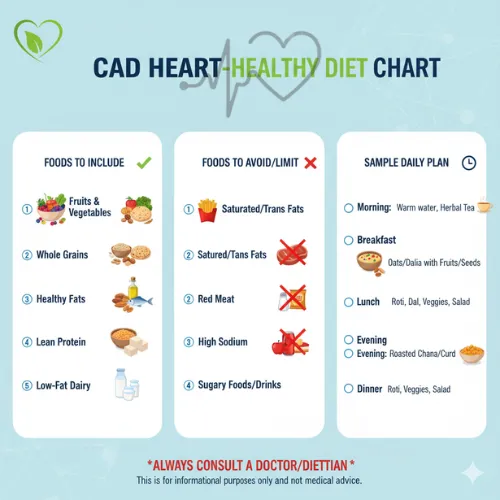
The simple answer is YES, it’s really possible to reverse CAD with diet and exercise.
If you have been diagnosed with CAD, here’s what you need to understand first: Completely curing CAD is very difficult, but that does not mean your life is over or that you need to live in constant worry. You can still live a normal life.
Now you have two options:
- Rest and just take medication.
- Take control of your life by making necessary lifestyle changes while continuing your medication.
If you follow the second path, you may start noticing improvements within two weeks. One important point to remember: medications alone cannot reverse CAD. Lifestyle changes are essential; otherwise, the disease will steadily progress.
You are the one responsible for taking care of your body, because you will live your entire life in it.
What Does “Reversing CAD” Really Mean?
Doctors use several measurable outcomes to define reversal PMC, BHF:
- Angiographic reversal: Actual reduction in artery blockage on imaging (seen in 22% of Dr. Esselstyn’s strictly adherent patients).
- Plaque stabilization: The plaques that accumulate in the arteries become more stable, so the chances of them rupturing and causing a heart attack are greatly reduced.
- Improved blood flow: Collateral vessels (new small blood vessels) form, and the lining of the arteries (endothelium) functions better.
- Symptom relief: 89–93% of patients reported that their chest pain significantly reduced after lifestyle changes. PubMed.
- Event prevention: Event prevention means preventing future heart attacks or heart-related problems. Some studies have shown that patients who strictly follow lifestyle changes reduce their risk of future heart events by almost 99%. PMC.
Landmark Studies That Changed Medicine
Dr. Dean Ornish’s Lifestyle Heart Trial
The first randomized controlled trial to scientifically prove CAD reversal was conducted by Dr. Dean Ornish in the 1990s. His program was based on a very low-fat vegetarian diet (only 10% of calories from fat), aerobic exercise, stress management techniques, and group support. JAMA.
Results after 5 years:
- Artery health: Artery narrowing improved by 3.1% in patients, while it worsened by 11.8% in those who did not follow lifestyle changes.
- Chest pain: Chest pain decreased in 91% of patients.
- Cholesterol: LDL (bad cholesterol) decreased by 37%.
- Heart events: Those who followed lifestyle changes had 2.5 times fewer cardiac events (such as heart attacks). PubMed.
Dr. Caldwell Esselstyn’s Plant-Based Program
Cleveland Clinic In May, Dr. Caldwell Esselstyn showed that a whole-food, oil-free, plant-based diet can have excellent results for heart health.
- No animal products, oils, nuts, or avocados– Only vegetables, fruits, legumes, and whole grains. Cleveland Clinic.
- In one study, 198 patients were followed, and among those who strictly followed the diet and lifestyle, 99.4% avoided heart-related problems (cardiac events) for 4 years.
- Patients ka average cholesterol 246 mg/dL se gir kar 137 mg/dL ho gaya.
- Angiograms (special X-ray tests) showed that the arteries were physically widening (enlarging) over time. Plant Strong.
Mediterranean Diet Research
For those seeking a long-term and sustainable diet, the Mediterranean diet has been widely studied and proven to be effective.
- PREDIMED trial (7,000 adults): If olive oil or nuts are included with the Mediterranean diet, the risk of cardiovascular events is reduced by about 30%. PMC.
- BMJ 2024 study: Women who closely followed the Mediterranean diet had a 24% lower risk of heart disease and a 23% lower risk of overall death (mortality), according to BMJ.
Exercise and CAD Reversal
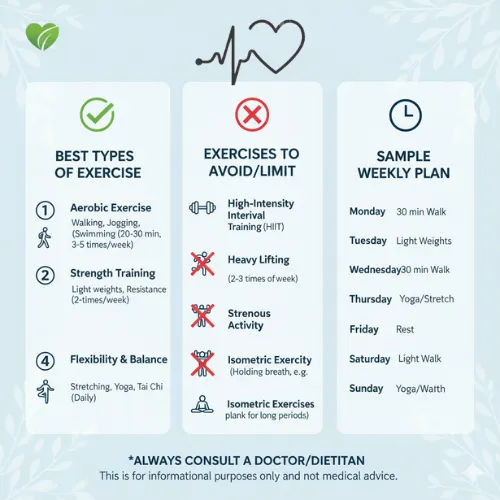
Cardiac Rehabilitation
People who follow structured exercise programs have a 26% lower risk of heart-related death (cardiac mortality) and a 23% lower risk of hospitalizations. European Heart Journal.
A typical plan includes:
- Aerobic exercise: Walking, cycling, or swimming for 20–60 minutes, 3–5 times per week.
- Intensity: Target 40–80% of your heart rate reserve.
- Resistance training: Do it 2–3 times per week. PMC.
Why Exercise Helps
- Collateral circulation: The body naturally forms new, small blood vessels that support the function of the arteries.
- Endothelial function: Artery lining and nitric oxide production improve.
- Cholesterol & BP: HDL (good cholesterol) increases and blood pressure decreases.
- Inflammation: Body inflammation markers such as CRP decrease. PMC.
Timeline: When to Expect Results
- Weeks 2–8: Chest pain is reduced, cholesterol levels improve, and stamina (strength) improves. PubMed.
- 3–6 months: Cholesterol levels drop significantly, and stress test results also improve.
- 1–5 years: In some patients, angiograms showed a reduction in plugged arteries and a reduction in heart-related problems (cardiac events).
Practical Steps to Get Started
- Doctor’s approval: Get doctor’s clearance before starting major lifestyle changes.
- Choose a diet approach:Choose from strict plant-based (Esselstyn), low-fat vegetarian with lifestyle support (Ornish), or Mediterranean (somewhat flexible).
- Gradual transition: Replace processed foods with whole plants, reduce animal products, and start walking regularly.
- Join cardiac rehab: Join if your doctor recommends it—it’s proven to improve survival.
The Bottom Line
Evidence clearly shows that CAD can be slowed, stopped, and in some cases even reversed if lifestyle changes are followed. Strict plant-based diets like the Esselstyn diet produce the most dramatic results, while the Mediterranean diet is a sustainable and manageable option. Exercise, especially supervised cardiac rehab, is very important.
Not everyone will achieve complete reversal, but almost all patients see measurable improvements in their symptoms, cholesterol, and quality of life. With a doctor’s guidance, dedication, and time, reversing CAD is not only possible—it is also achievable. Medical News Today, Healthline.
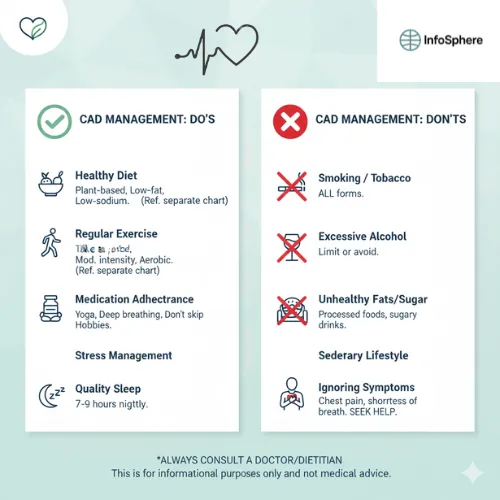
Click here to know more about Coronary Artery Disease (CAD).
How can I reverse coronary artery disease naturally with diet and exercise?
To keep your heart healthy naturally, you can do the following:
Include fruits, vegetables, whole grains (like brown rice and oats), and healthy fats (like nuts and olive oil) in your diet.
Get regular exercise, such as walking, swimming, or cardiac rehabilitation exercises.
Avoid processed foods, excess sugar, and saturated fats (like fried foods, butter, and full-fat cheese).
Simple meaning: good food + daily movement = strong heart.
What is the best diet plan to reverse CAD at home?
The best diet for your heart is plant-based or Mediterranean-style. Meaning:
Eat more leafy greens (spinach, fenugreek), nuts, beans, berries, whole grains (brown rice, oats), and lean proteins (chicken, fish, tofu).
Cut down on red meat, fried foods, and refined sugar.
Drink more water and cut down on salt.
Which exercise routine is effective for reversing coronary artery disease?
To keep your heart strong, do the following exercises:
Moderate-intensity aerobic exercises, such as brisk walking, cycling, or swimming, for 30–45 minutes per day, 5 days a week.
Strength training (weight training or bodyweight exercises) 2–3 days a week.
Flexibility exercises, such as yoga, are also helpful.
Be sure to consult your doctor before starting exercise.
How does a plant-based diet help reverse coronary artery disease?
Plant-based diets are rich in fiber, antioxidants, and healthy fats. These things:
Lower cholesterol
Reduce inflammation in the body
Reduce plaque in the arteries
This allows blood to flow easily and keeps the heart healthy. Result: The risk of CAD is reduced, and the progression of the disease is slowed.
What lifestyle changes are necessary to reverse coronary artery disease?
In addition to diet and exercise, there are some other important things:
Quitting smoking
Managing stress
Getting good sleep
Maintaining a healthy weight
Also, it’s important to have regular check-ups and keep your blood pressure, cholesterol, and blood sugar checked.

- Nipah Virus: A Complete Guide to Symptoms, Treatment, and Prevention (2025 Update) - March 18, 2026
- Nipah Virus Mortality Rate and Survival Chances: A Comprehensive 2025 Guide - February 9, 2026
- Warning Signs Your Body Uses to Show Health Issues - February 2, 2026