
In the world of infectious diseases, few names trigger as much immediate concern among health experts as the Nipah Virus (NiV). While the world has become all too familiar with viruses like COVID-19 or the seasonal flu, Nipah belongs to a different category entirely. It is rarer, yes, but it is significantly more deadly.
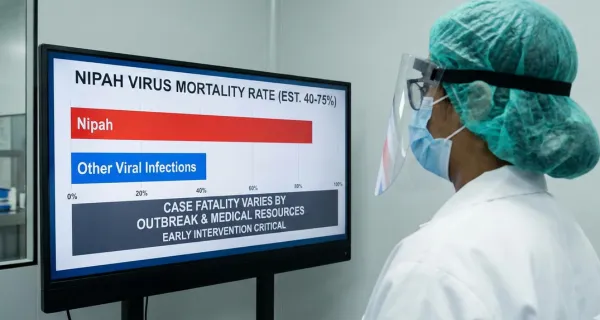
For anyone concerned about their health and the safety of their family, understanding Nipah Virus symptoms, treatment, and prevention is not just about reading medical news—it is a vital step in preparedness. The virus is known for its high fatality rate, which estimates suggest ranges from 40% to 75% depending on the outbreak capabilities of the region.
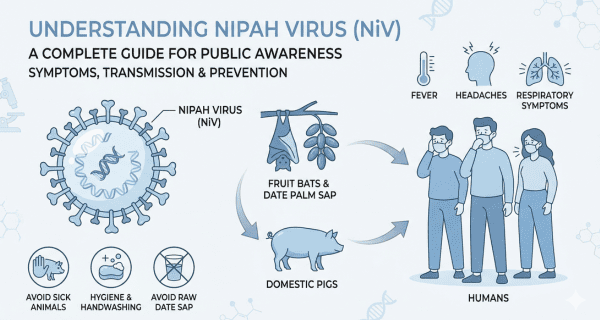
This blog post will serve as your ultimate guide. We will strip away the complex medical jargon and explain in simple language what this virus is, how it travels from animals to humans, what signs you must look for, and most importantly, how doctors are handling patients in 2025 with the latest medical research.
विषय-सूची (Table of Contents)
What is the Nipah Virus?
To defeat an enemy, you must first understand it. The Nipah virus is what scientists call a “zoonotic virus.” In simple terms, this means it is a disease that jumps from animals to humans.
It belongs to a family of viruses called Paramyxoviridae (specifically the genus Henipavirus). It is closely related to the Hendra virus, which is another severe pathogen affecting horses and humans.
The Origin Story
The virus was first identified in 1999. It didn’t start in a laboratory; it started in nature. A massive outbreak occurred among pig farmers in a Malaysian village named Sungai Nipah—which is how the virus got its name. In that initial outbreak, pigs were the intermediate carriers that passed the virus to humans. Since then, the virus has been identified in outbreaks across Bangladesh and India, with a slightly different, more direct method of transmission.
The Natural Host: The Flying Fox
The true “reservoir” or home of the Nipah virus is the fruit bat, specifically the Pteropus species, commonly known as the “Flying Fox.” These large bats can carry the virus inside their bodies without getting sick. They fly long distances to find fruit, and wherever they go, they carry the virus with them.
How Nipah Virus Spreads (Transmission Cycle)
Understanding how the virus moves is the key to stopping it. Unlike the flu, which floats in the air everywhere, Nipah requires a specific chain of events to reach a human.
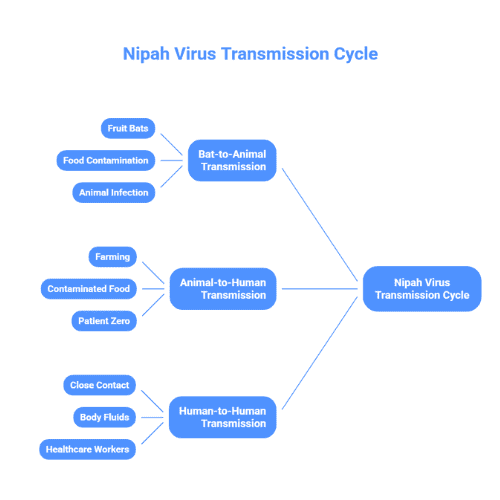
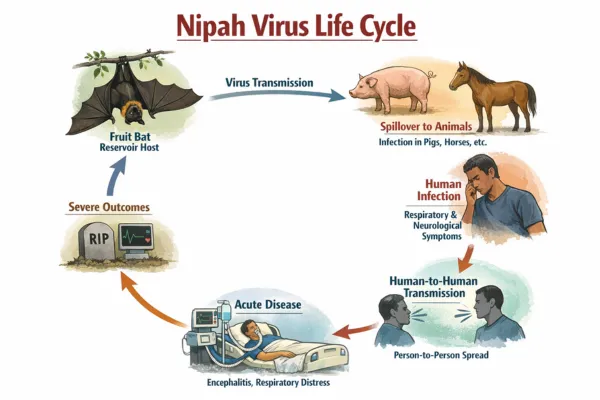
Bat-to-Animal Transmission
It usually starts with food. Fruit bats love sweet fruits (like mangoes or guavas) and date palm sap.
- A bat bites a fruit or drinks from a pot collecting date palm sap.
- While eating, the bat may urinate or leave saliva on the fruit or in the sap.
- This fruit falls to the ground. A pig, a dog, or a horse might eat this leftover fruit.
- The animal becomes infected. In pigs, the virus multiplies rapidly, making the pig highly contagious.
Animal-to-Human Transmission (Spillover)
This is how the first human in an outbreak gets sick (Patient Zero).
- Farming: Farmers handling infected pigs or cleaning their sties can inhale droplets released by the coughing pigs or touch their fluids.
- Contaminated Food: In Bangladesh and India, the most common cause is humans drinking raw date palm sap. If a bat has urinated in the collection pot overnight, the sap becomes a deadly cocktail of the virus. Similarly, eating fruit found on the ground that has teeth marks on it is a major risk.
Human-to-Human Transmission
Once a human is infected, they can infect others. This is the most dangerous phase for outbreaks.
- The virus spreads through close contact with the body fluids of an infected person (saliva, urine, blood, nasal secretions).
- Family members caring for a sick relative at home are at high risk.
- Healthcare workers (nurses and doctors) are at extreme risk if they treat patients without full protective gear.
Nipah Virus Symptoms: A Timeline of Infection
If you or someone you know has been in an area where an outbreak is happening, knowing the timeline of symptoms is critical for survival.
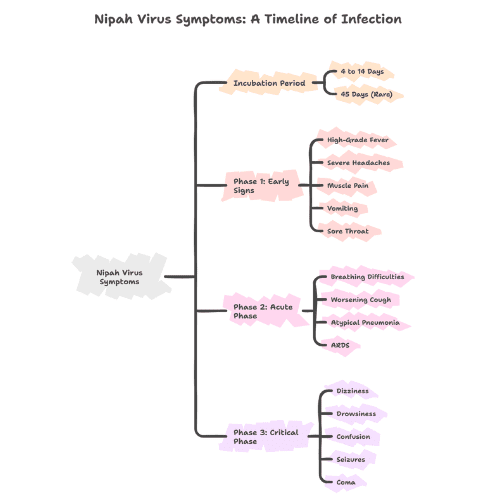
The Incubation Period
After the virus enters the body, it doesn’t attack immediately. This “silent period” is called the incubation period. It typically lasts 4 to 14 days. However, in rare cases, the virus has stayed dormant for as long as 45 days.
Phase 1: The Early Signs (Flu-like Symptoms)
The first few days are confusing because Nipah looks exactly like a common flu or dengue fever.
- High-grade fever (often sudden).
- Severe headaches.
- Muscle pain (myalgia).
- Vomiting and sore throat.
Phase 2: The Acute Phase (Respiratory Distress)
As the virus multiplies, it begins to attack the lungs.
- The patient may struggle to breathe.
- Coughing worsens.
- This can lead to “atypical pneumonia” and Acute Respiratory Distress Syndrome (ARDS), where the lungs cannot provide enough oxygen to the blood.
Phase 3: The Critical Phase (Encephalitis)
This is the hallmark of Nipah infection and the most dangerous stage. “Encephalitis” means inflammation of the brain. The virus crosses the blood-brain barrier and attacks brain tissue.
- Dizziness and Drowsiness: The patient becomes extremely sleepy.
- Confusion: They may not recognize family members or know where they are.
- Seizures: Uncontrollable shaking or fits may occur.
- कोमा: Without rapid intervention, the patient can slip into a deep coma within 24 to 48 hours of these neurological signs appearing.
How is Nipah Virus Diagnosed?
Because the early symptoms look like Malaria, Dengue, or Flu, doctors cannot diagnose Nipah just by looking at the patient. They need advanced lab tests.
If a doctor suspects Nipah (usually based on travel history or contact with bats/pigs), they will collect samples:
- Throat and Nasal Swabs: To look for the virus in the upper respiratory tract.
- Urine Samples: The virus is often present in urine.
- Blood Samples: To check for the virus or antibodies.
- Cerebrospinal Fluid (CSF): If the patient has brain symptoms, a spinal tap might be done.
The Tests Used:
- RT-PCR (Real-Time Polymerase Chain Reaction): This is the gold standard. It detects the genetic material of the virus. It is very accurate in the early stages of infection.
- ELISA: This test looks for antibodies (the body’s defense soldiers) that develop later in the illness.
Read my Medical Test Blog Here
Treatment and Patient Handling in 2025
“Is there a cure?” This is the most common question. As of the latest medical guidelines in 2025, there is no universally approved antiviral drug that guarantees a cure for Nipah virus in humans. However, this does not mean doctors are helpless.
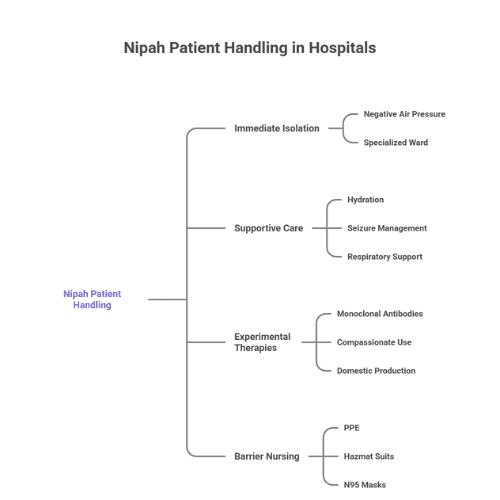
How Patients are Handled in Hospitals Today
Handling a Nipah patient requires a military-level precision in hygiene and isolation.
1. Immediate Isolation: As soon as a patient is suspected of having Nipah, they are moved to a specialized isolation ward. This room usually has “negative air pressure,” which prevents the air inside the room from flowing out into the hospital corridors.
2. Supportive Care (The Main Treatment): Since we cannot kill the virus directly with a pill yet, doctors focus on keeping the patient’s body strong enough to fight it off.
- Hydration: IV fluids are given to prevent dehydration from fever and vomiting.
- Seizure Management: Anti-convulsant medicines are given to stop seizures, which protects the brain from further damage.
- Respiratory Support: If the patient cannot breathe, they are put on a ventilator.
3. Experimental Therapies (Monoclonal Antibodies): This is where 2025 research comes in. In severe cases, doctors may use “compassionate use” protocols.
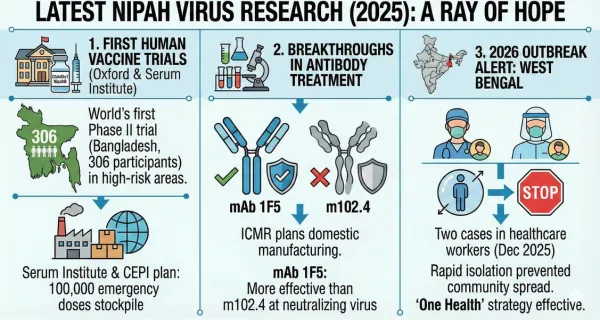
- Monoclonal Antibodies (mAbs): These are lab-made proteins that mimic the immune system. Drugs like m102.4 or the newer mAb 1F5 bind to the virus and stop it from entering healthy cells. Recent reports from the Indian Council of Medical Research (ICMR) indicate that domestic production of these life-saving antibodies is being fast-tracked to ensure hospitals have them during outbreaks [Source: ICMR 2025 Reports].
4. Barrier Nursing: Nurses and doctors dealing with the patient wear full PPE (Personal Protective Equipment)—hazmat suits, N95 masks, double gloves, and face shields. This is non-negotiable.
Prevention: How to Stay Safe
Since treatment is difficult, prevention is the only true “cure.” You can drastically reduce your risk by following simple rules, especially if you live in or travel to India (Kerala, West Bengal) or Bangladesh.
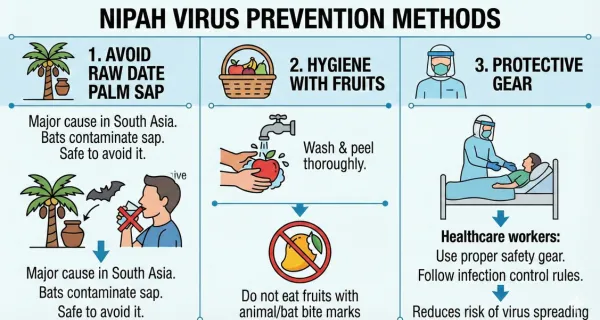
Food Safety
- Stop Drinking Raw Date Palm Sap: This is the #1 cause of outbreaks in South Asia. If you must drink it, boil it first. Heat kills the virus instantly.
- Inspect Your Fruit: Never eat fruit that looks like it has been bitten, scratched, or damaged by an animal.
- Wash Thoroughly: Wash all fruits and vegetables with clean water. Peel fruits like mangoes and guavas before eating.
Animal Safety
- Avoid Bats: Do not disturb bat roosting sites. If you see a dead bat, do not touch it with bare hands.
- Livestock Hygiene: Farmers should wear gloves and masks when handling sick pigs or horses and limit the exposure of their animals to fruit bats.
Human Safety
- Hand Washing: It sounds simple, but washing hands with soap and water is highly effective against the Nipah virus envelope.
- Avoid Contact: Do not share food, water, or bedding with someone who is showing symptoms of viral fever until they are tested.
The Future: Latest Research & Vaccines (2025-2026)
The year 2025 has brought a wave of hope. We are no longer just reacting to the virus; we are actively building defenses against it.
The Oxford Vaccine Trial
The biggest news in the medical community is the ChAdOx1 NipahB vaccine. In December 2025, the University of Oxford launched Phase II human trials for this vaccine. Unlike previous tests done on animals, this trial is testing the vaccine on real people in high-risk areas. If successful, this will be the first shield humanity has against Nipah [Source: University of Oxford Clinical Trials, 2025].
Rapid Testing Kits
Scientists are also developing faster testing kits that can work like COVID-19 rapid antigen tests. This would allow doctors in rural villages to diagnose Nipah in minutes rather than waiting days for lab results, saving precious time for isolation.
निष्कर्ष (Conclusion)
The Nipah virus is a stark reminder of the delicate balance between humans and nature. It is a severe disease with a high mortality rate, but it is not invincible.
The path to safety lies in awareness and hygiene. By understanding that the virus comes from bats and spreads through contaminated fluids, we can make smart choices—like avoiding raw sap and washing our hands—that cut the chain of transmission.
Moreover, with the rapid advancements in 2025 regarding vaccines and antibody treatments, the future looks brighter. We are moving toward a world where Nipah might eventually become a manageable, preventable disease rather than a deadly outbreak.
Until then, stay alert, stay clean, and stay informed.
